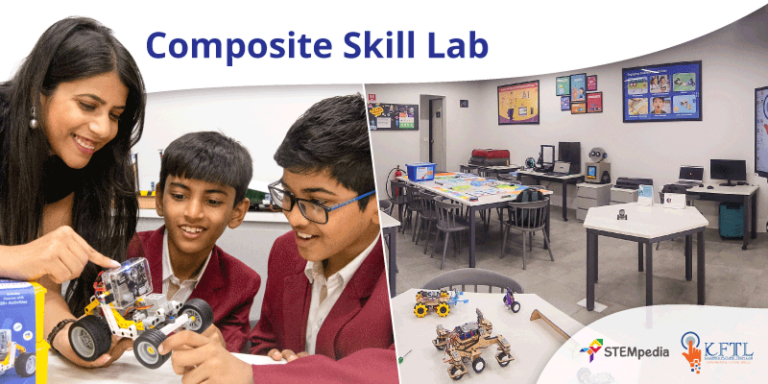
The Kalorex Future Tech Lab (KFTL) Composite Skill Lab is a flexible, multi-sector, hands-on learning environment designed to support skill and vocational education for students from Class VI to Class XII. Rather than building separate rooms for each subject, the CSL brings multiple skill areas together into one well-organised, practical learning space.
In a fast-evolving world, students need more than theory; they need practical, hands-on experience to develop critical skills for the 21st century. The Kalorex Future Tech Lab (KFTL), in partnership with STEMpedia, is a live, fully operational Composite Skill Lab that provides students with immersive exposure to AI, Robotics, Coding, Electronics, Mechatronics, and Machine Learning.
What is a Composite Skill Lab?
A Composite Skill Lab is a flexible, multi-sector, hands-on learning environment designed to support skill and vocational education for students from Class VI to Class XII. Rather than creating separate rooms for each subject, the CSL brings multiple skill areas together into a single well-organised space where students explore, create, test, and refine real ideas unlike anything a traditional classroom can offer.
The concept is grounded in the National Education Policy 2020 and the National Curriculum Framework for School Education 2023, both of which emphasise the integration of vocational education into mainstream schooling. NEP 2020 calls for no hard separation between academic and vocational streams and sets a national target of exposing at least 50% of school learners to vocational education by 2025.
Concept Explanation of STEMpedia x KFTL Composite Skill Lab
A KFTL Composite Skill Lab is a flexible, multi-functional lab where students engage in hands-on projects across several domains. Unlike traditional classrooms, it emphasises experiential learning, allowing students to explore, create, test, and refine their ideas.
Students develop a combination of technical, creative, and cognitive skills, bridging the gap between theoretical knowledge and real-world applications. This approach creates curiosity, resilience, and confidence in young learners.
The intent behind the CSL is clear: students from Class VI to Class XII need regular, structured exposure to real skills, real tools, and real work across three forms of work defined in NCF-SE 2023:
- Life Forms — agriculture, gardening, floriculture, nursery management
- Machines and Materials — electronics, robotics, coding, mechatronics, AI, woodwork, apparel
- Human Services — healthcare, retail, finance, hospitality, tourism
What is KFTL?
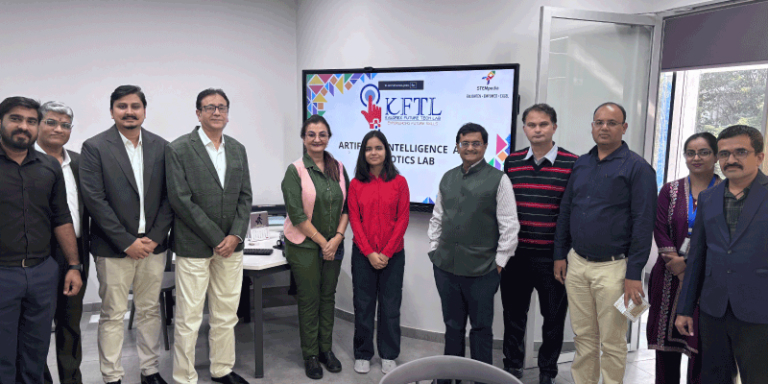
KFTL (Kalorex Future Tech Lab) in Gujarat is a live, fully operational Composite Skill Lab (CSL) designed to provide students with hands-on skills in emerging technologies. It focuses on Work with Machines and Materials, including Electronics, Mechatronics, Robotics, Coding, AI, Woodwork, Apparel, Automotive, and 3D Printing, equipping students with applied STEM competencies for real-world problem solving.
Dr. Manjula Pooja Shroff founded KFTL and ensures students gain practical experience in technologies reshaping the future. The lab focuses on applied learning in Machines and Materials, preparing students to confidently tackle real-world STEM challenges.
Among the lab’s specialised zones, STEMpedia provides the AI and Robotics Lab — the technical core of KFTL, delivering Machines and Materials skills through active projects in electronics, robotics, coding, AI, mechatronics, and 3D printing. Students gain practical experience while designing, building, and testing real-world solutions, ensuring applied learning that directly connects to future STEM careers.
The KFTL Focus Work with Machines and Materials
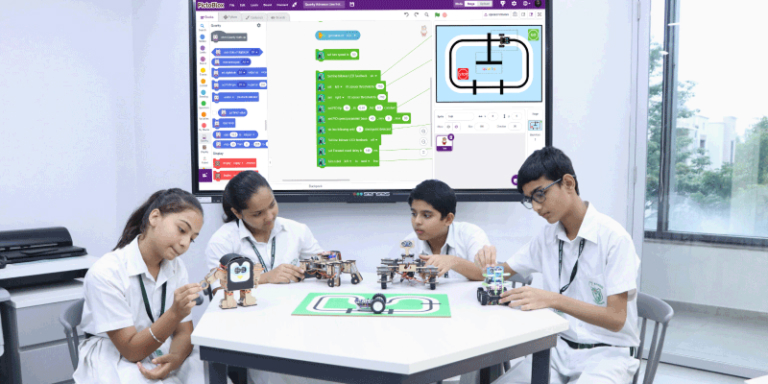
The KFTL lab is built with a specific, deliberate focus on the second category: Work with Machines and Materials. This is the domain where technology education lives: electronics, mechatronics, robotics, coding, AI, woodwork, apparel, and the practical engineering thinking that connects all of them.
It is the area most directly relevant to the careers and industries defining the next two decades. It is also the area where most schools currently have the largest gaps in practical infrastructure and curriculum. When a student wires a circuit, writes code that controls a robot, trains an AI model, or builds a smart automation system, they are not just learning a skill. They are developing a way of thinking patiently, methodically, practically, and with curiosity that transfers across every subject and every career path.
Students develop a combination of technical, creative, and cognitive skills that bridges the gap between theoretical knowledge and real-world application. This approach builds curiosity, resilience, and genuine confidence in young learners, the kind that comes not from being told they are capable, but from building something that actually works.
Why does the Composite Skill Lab matter now?
The shift toward skill-based education is not happening in isolation. India’s workforce needs are changing rapidly. According to the World Economic Forum’s Future of Jobs Report 2025, 86 % of employers expect AI and information processing technologies to transform their businesses by 2030. Students who graduate without practical exposure to technology, tools, and real-world work contexts will face a significant capability gap.
Schools that treat the CSL as an infrastructure checkbox are missing the point. The real value of a well-implemented Composite Skill Lab lies in what it does for students over time. When a student learns to wire a basic circuit, grow a plant from a cutting, measure a patient’s blood pressure, or write a block of code that controls a robot, they are not just learning a skill. They are developing a way of thinking patiently, methodically, practically, and with curiosity.
That kind of thinking is transferable across every subject and every career path.
How STEMpedia Supports Composite Skill Lab Setup
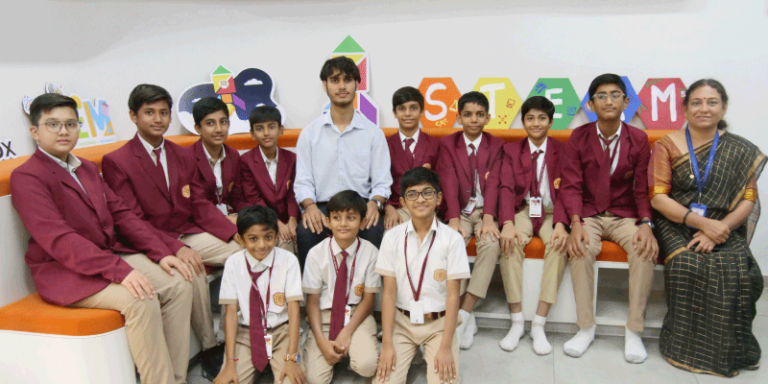
Setting up a Composite Skill Lab is one decision. Ensuring it runs effectively, consistently, and with genuine educational depth is another. STEMpedia supports both from the first conversation about space and budget through to day-to-day operations and year-round teacher support.
With over 500 AI and Robotics Labs established across India and more than 40 Agile ATLs set up in CBSE-affiliated government schools, STEMpedia brings direct, proven implementation experience to every lab it helps build. That track record is not a background detail; it is the foundation of everything the organisation offers schools undertaking the Composite Skill Lab mandate.
Support covers every stage of the process:
- Lab layout and configuration tailored to the school’s available space, chosen skill sectors, and student cohort, ensuring the physical environment is genuinely designed for the learning it needs to deliver
- Tools and equipment procurement aligned with CBSE’s sector tool lists, selected for quality, durability, and long-term usability rather than one-off demonstrations
- Curriculum alignment with ICT, AI, Robotics, and Coding subjects in line with NEP 2020 and NCF-SE 2023 — so what students do in the lab connects directly to what they are expected to learn and demonstrate
- Teacher training is delivered before the lab opens and continued throughout the academic year, so educators are confident, practically equipped, and genuinely able to lead sessions without relying on external support for every class
- Ongoing operational guidance to keep the lab active, tools functional, and curriculum evolving as students advance through the years.
How to Set Up a Composite Skill Lab?
The KFTL Composite Skill Lab is designed to maximise flexibility and functionality for hands-on learning across multiple technology domains. Schools should allocate sufficient space for collaborative workstations, robotics and AI projects, AR/VR setups, and 5DX multi-sensory areas. Proper ventilation, lighting, and electrical setups are essential, along with modular furniture that allows easy rearrangement for different activities.
For a detailed guide on designing, planning, and setting up a composite skill lab as per CBSE standards, refer to the article: How to Set Up a Composite Skill Lab in CBSE Schools.
Skills Students Develop in a Composite Skill Lab
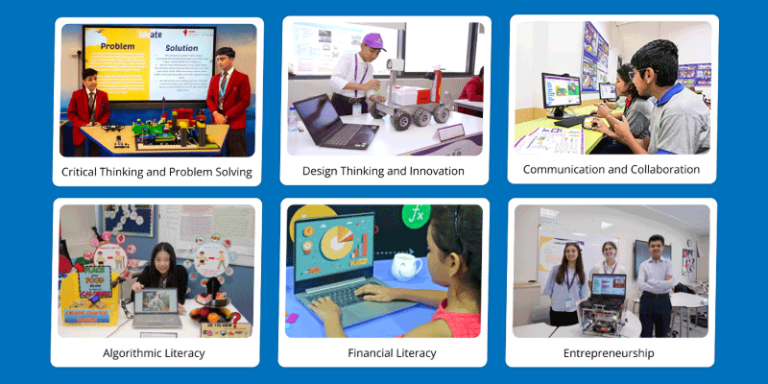
The learning outcomes of a well-run CSL extend beyond the technical skills of a single domain. Across all three forms of work, students consistently develop:
- Critical Thinking and Problem Solving — Break challenges into manageable steps and evaluate solutions logically.
- Design Thinking and Innovation — Create functional, original solutions to real-world problems.
- Communication and Collaboration — Work effectively in teams to complete projects and share ideas.
- Algorithmic Literacy — Apply logical reasoning and sequencing to solve problems and program solutions.
- Financial Literacy — Understand and manage resources, budgets, and practical financial concepts.
- Entrepreneurship — Connect skills to real-world products, services, and business ideas.
These are 21st-century skills that every educator, employer, and parent recognises as essential. Unlike rote learning, these abilities are developed through hands-on, project-based experience — the core purpose of the Composite Skill Lab.
In a Nutshell
The STEMpedia KFTL Composite Skill Lab provides a transformative learning environment where students connect theory with practice. By participating in KFTL programs, students develop practical skills, creativity, and problem-solving abilities, preparing them to excel in the rapidly evolving technological world.
Investing in a KFTL lab ensures students are not only academically competent but also future-ready innovators capable of tackling real-world challenges with confidence.
Empower your students to explore, innovate, and build real confidence in AI, Robotics, and 21st-century technologies. STEMpedia’s team is ready to help you plan, build, and run a lab that goes well beyond the minimum and delivers outcomes that matter.
Frequently Asked Questions
1. Is a CSL mandatory for CBSE schools?
Yes. CBSE requires schools seeking fresh affiliation to set up a CSL, and existing schools must establish one within a compliance period.
2. What age groups or classes is the CSL designed for?
CSLs are designed for Classes VI to XII, with activities scaled to suit students’ age and skill levels.
3. What tools and equipment are included in a CSL?
- Quarky Robotics Kits, PictoBlox coding platform
- 3D printers, sensors, actuators, IoT devices
- Computers with pre-installed software, microscopes, and AR/VR devices
- Safety gear, fire extinguishers, and first-aid kits
4. How does STEMpedia support CSL setup?
STEMpedia provides:
- Lab layout and space optimisation
- Tools and technology aligned with CBSE standards
- Teacher training and ongoing support
- Curriculum integration for STEM, AI, Robotics, and Coding
5. Are there career benefits for students using the CSL?
Yes. Students gain future-ready skills, problem-solving, creativity, and interdisciplinary knowledge, which prepare them for careers in STEM, AI, and emerging technologies.