
Setup Composite Skill Lab for CBSE Schools
A holistic ecosystem with a multidisciplinary curriculum aligned with Kaushal Bodh and Kaushal Vikas, tools and equipment, teacher training, vocational education implementation and annual showcase (Kaushal Mela).
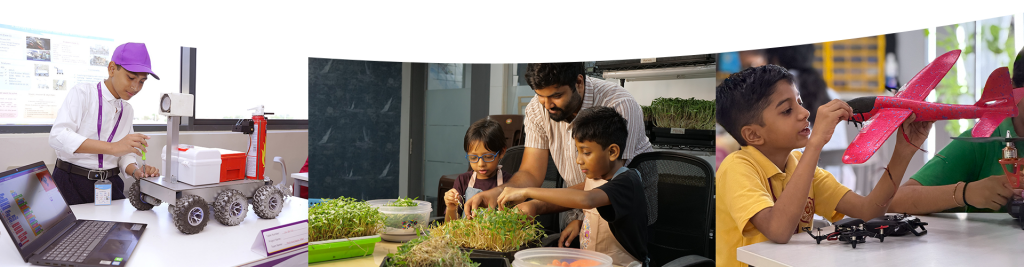

70+
Countries Reached

4,000+
Schools Globally

30,000+
Teachers Trained

3M+
Students Impacted
What is a Composite Skill Lab?
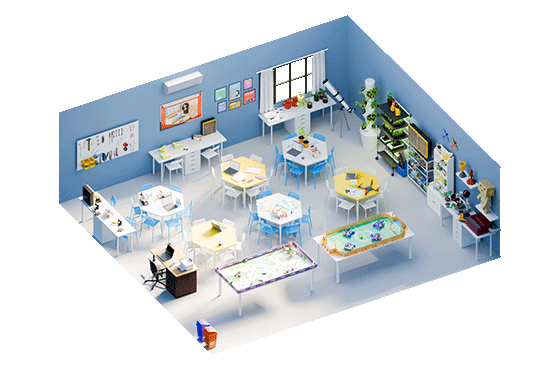
A Composite Skill Lab (CSL) is a multidisciplinary learning space built as a makerspace, where students develop practical and future-ready skills through hands-on, experiential and project-based learning.
Aligned with NEP 2020, NCF-SE 2023 and CBSE’s Composite Skill Lab framework, it brings different skill areas together in one flexible learning environment. It covers all three forms of work:
Work with Life Forms, Work with Machine and Materials and Work in Human Services.
How does a Composite Skill Lab actually Work?
Students learn through practical projects across AI, Robotics, Agriculture, Sustainability, Technology, Finance and Entrepreneurship in alignment with Kaushal Bodh and Kaushal Vikas Curriculum.
6 Pillars of Composite Skill Lab Offering
STEMpedia brings infrastructure, learning resources, technology and teacher support together into one end-to-end Composite Skill Lab ecosystem. Each element works in sync to help schools deliver structured, hands-on vocational education, from lab setup and curriculum delivery to student projects and assessment.
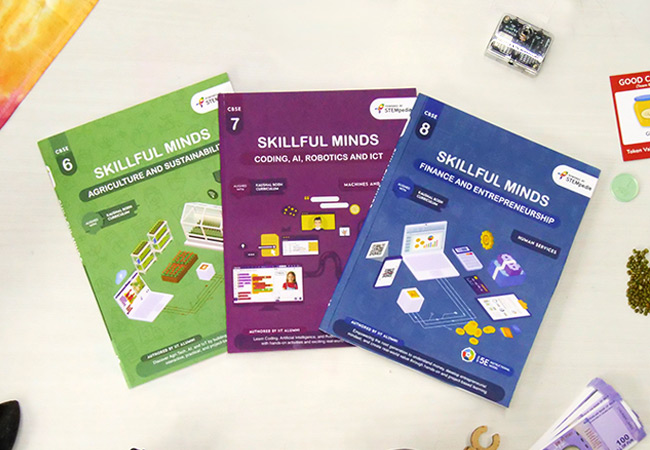
1. Kaushal Bodh and Kaushal Vikas Aligned Curriculum and Books
- 165 skill education sessions per grade with projects, lesson plans, activity mapping and defined learning outcomes for grades 6–10.
- Real-world application: Work across areas such AgriTech, technology, finance and entrepreneurship to solve real world challenges.
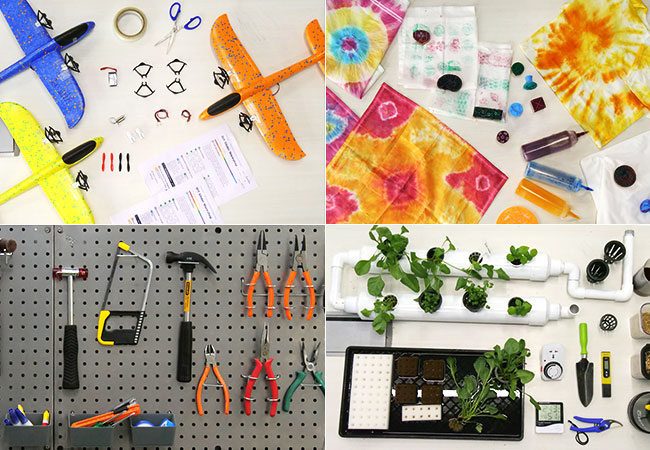
2. DIY Kits, Tools and State-of-Art Equipment for Hands-on Learning
- Kaushal Bodh aligned Tool List for robotics, electronics, aeromodelling, smart cultivation, astronomy and engineering.
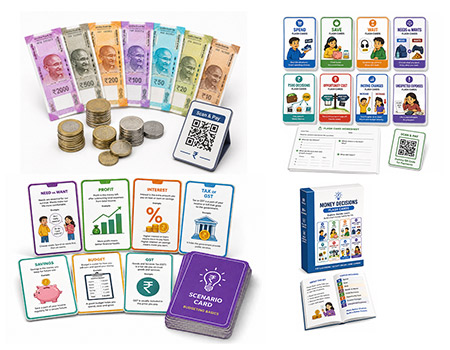
- Learn by Doing. Students build practical skills through interactive kits, experiments and financial literacy tools designed for future-ready learning curated from CBSE guidelines.
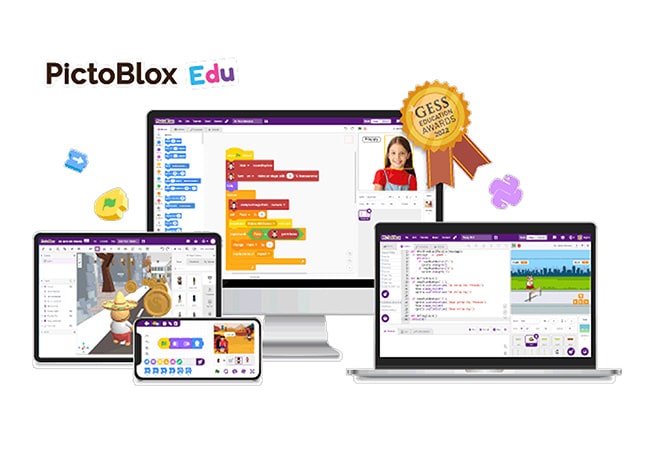
3. AI and Digital Learning Software
- PictoBlox is Block-based and Python coding software for robotics, AI, IoT, animations, games and interactive projects.
- Build AI projects, train ML models, design 3D models in 3D and XR Studio while developing coding and computational thinking skills.
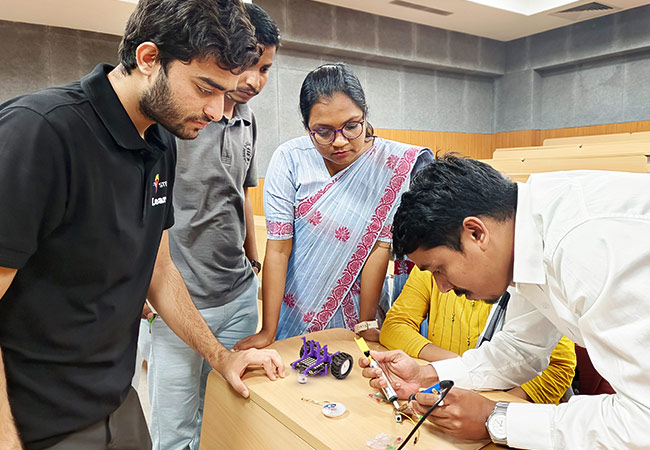
4. Teacher Training and Continuous Professional Development with Assessment
- 20+ hours of Onsite teacher training covering skill education, project delivery, tool use, safety, portfolio assessment.
- Weekly upskilling sessions, Continuous hand holding and support and learning-outcome mapping for effective CSL implementation.
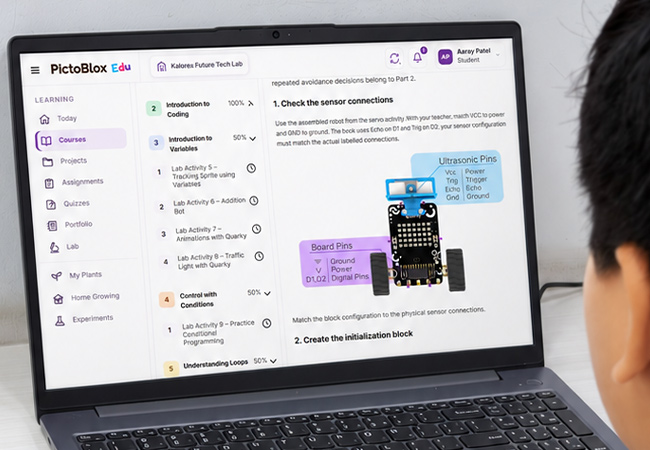
5. Learning Management System with TLM
- Grade-wise teaching and learning materials, detailed lesson plans, activity sheets, lecture slides, worksheets and assessment guides.
- AI-enabled LMS for premium classroom management features like bulk account creation, track projects’ progress, mock tests and assignment submission.
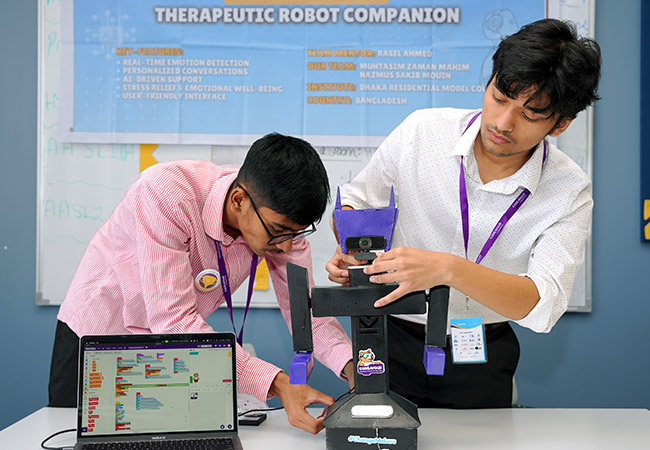
6. Kaushal Mela – A Gateway to Codeavour International Competition
- Maker Fest: Kaushal Mela is an annual function where students showcase their projects, prototypes, dashboards and portfolios to parents, teachers and the community.
- Entrepreneurial Journey: Gives students an opportunity to demonstrate their innovations at Codeavour.
Skillful Minds 360 - Kaushal Bodh Aligned Curriculum
Grounded in the NCF-SE 2023 framework and aligned with Kaushal Bodh 0685 and Kaushal Vikas 444, STEMpedia’s Skillful Minds 360 curriculum brings the Three Forms of Work together through structured, hands-on learning. It connects practical skills with real-world challenges, sustainability, green skills and the UN Sustainable Development Goals (SDGs), helping students explore how their learning can contribute to a changing world of work. Each academic year is planned and structured to broaden students’ exposure to different applications and learning pathways.
| — | Grade 6-8 (Kaushal Bodh) | Classes 9-10 (Kaushal Vikas) |
|---|---|---|
| Life Forms | 20 | 20 |
| Machines and Materials | 50 | 50 |
| Human Services | 20 | 20 |
| Kaushal Mela | 18 | 18 |
| Electives | 57 | 24 |
| Total per Academic year | 165 Sessions | 132 Sessions |
The Three Forms of Work for Grades 6th to 10th
Students explore practical skills across three interconnected areas, from agriculture and sustainable cultivation to AI, robotics, finance and entrepreneurship. Through hands-on activities and projects, they learn to apply concepts, solve problems and develop skills in an integrated manner to equip students for the Future of Work in alignment with the World Economic Forum.
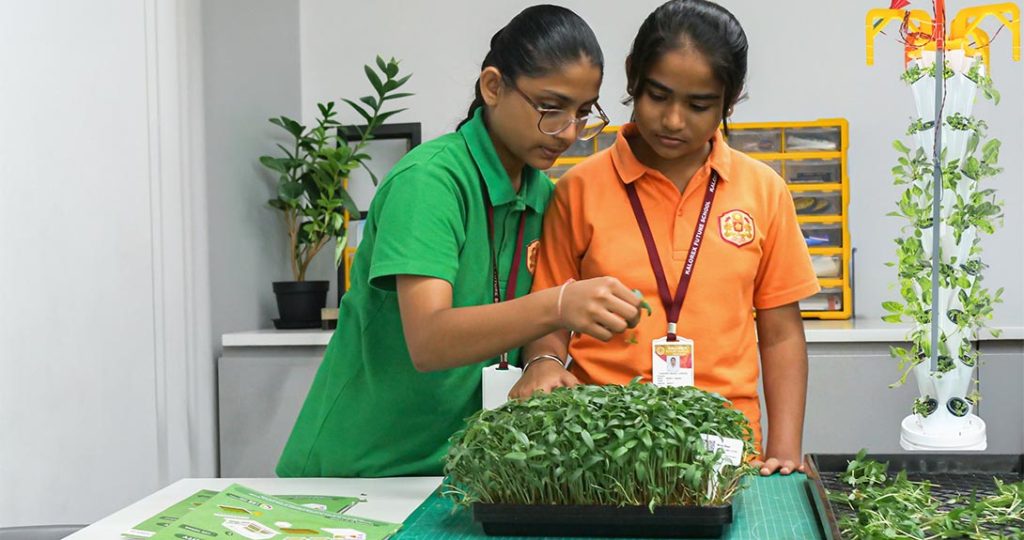
Agriculture and Sustainability
Working with Life Forms
- Agriculture
- Gardening
- Hydroponics & Aeroponics
- Drip Irrigation
- Plant Science
- IoT-Based Farming
- Precision Agriculture
- Sustainability
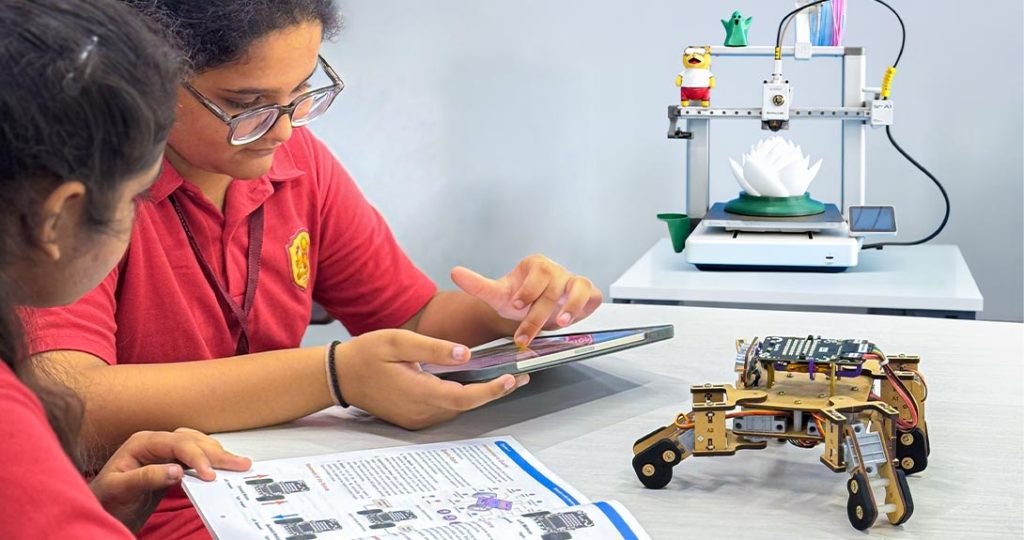
Coding, AI, Robotics and ICT
Working with Machines and Materials
- AI and Robotics
- ICT Coding
- Electronics
- Automation
- 3D Design and Prototyping
- Engineering
- Drone and Aeromodelling
- Fashion
- Tie and Dye
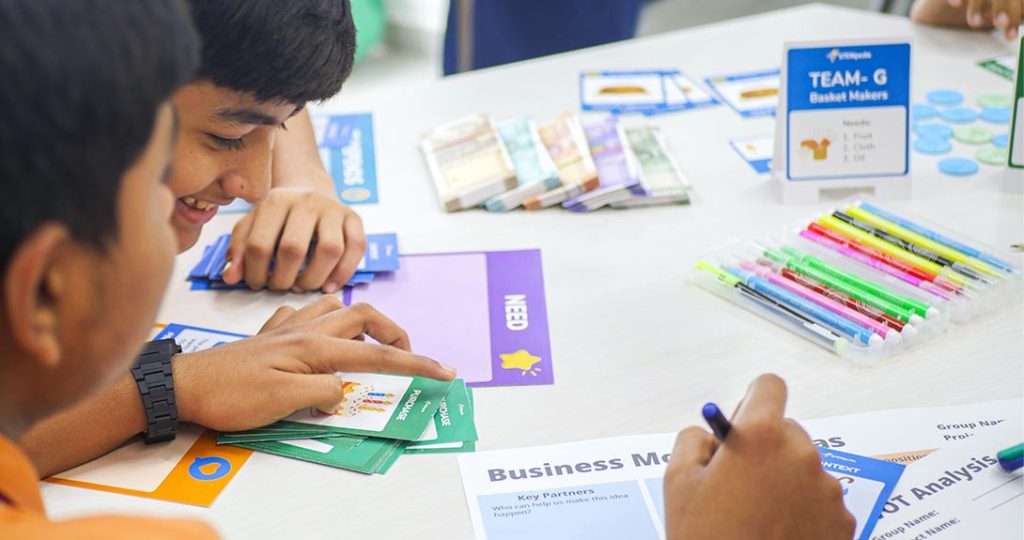
Finance and Entrepreneurship
Working in Human Services
- Financial Literacy
- Money Management
- Banking
- Audio Video Content Generation
- Entrepreneurship
- Budgeting
- Business Fundamentals
- Consumer Services
- Communication and Marketing
Explore Vocational Skill Focused Electives
Expand the learning experience with electives that let students explore additional skills and areas of interest through practical activities.
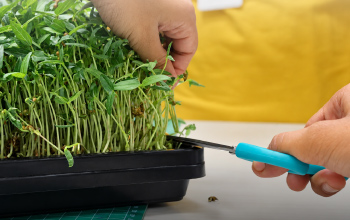
Food Production, Processing and Nutrition
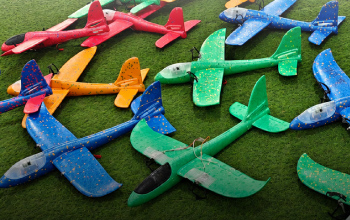
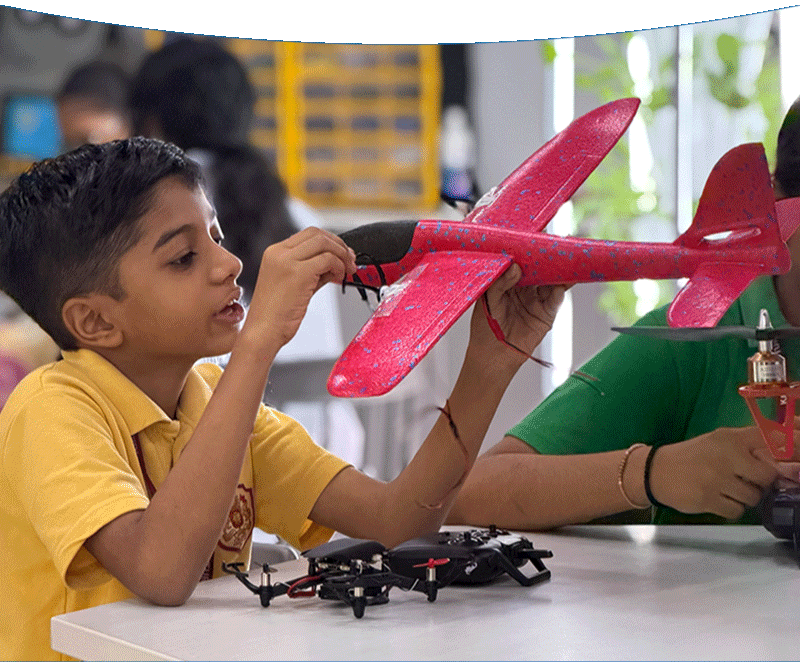
Aeromodelling with Gliders
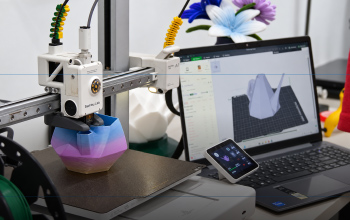
3D Design and Printing
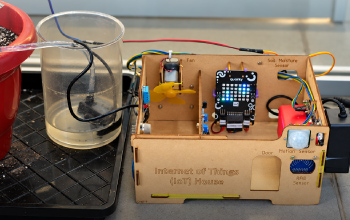
Circuit Builders: Electronics
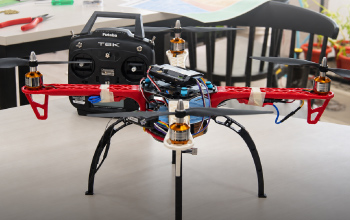
Build, Code, annd Fly: Drone Lab
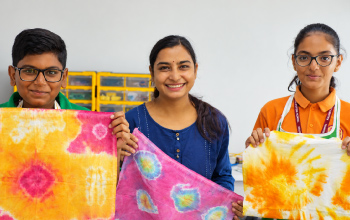
Threads and Trends: Apparel Design
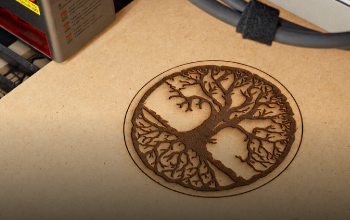
Cut, Craft, and Create: Laser Cutting
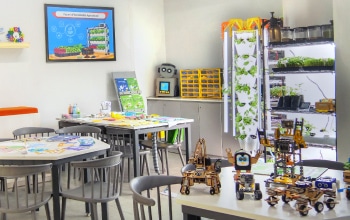
Plus Many More Electives
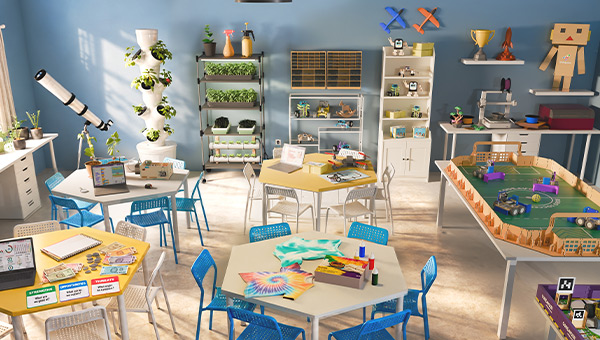
Innovation Playground for Vocational Education
Thoughtfully designed spaces where students, teachers, parents feel inspired to spend time exploring, learning and creating. Every corner encourages curiosity, hands-on discovery and the transformation of ideas into innovations.
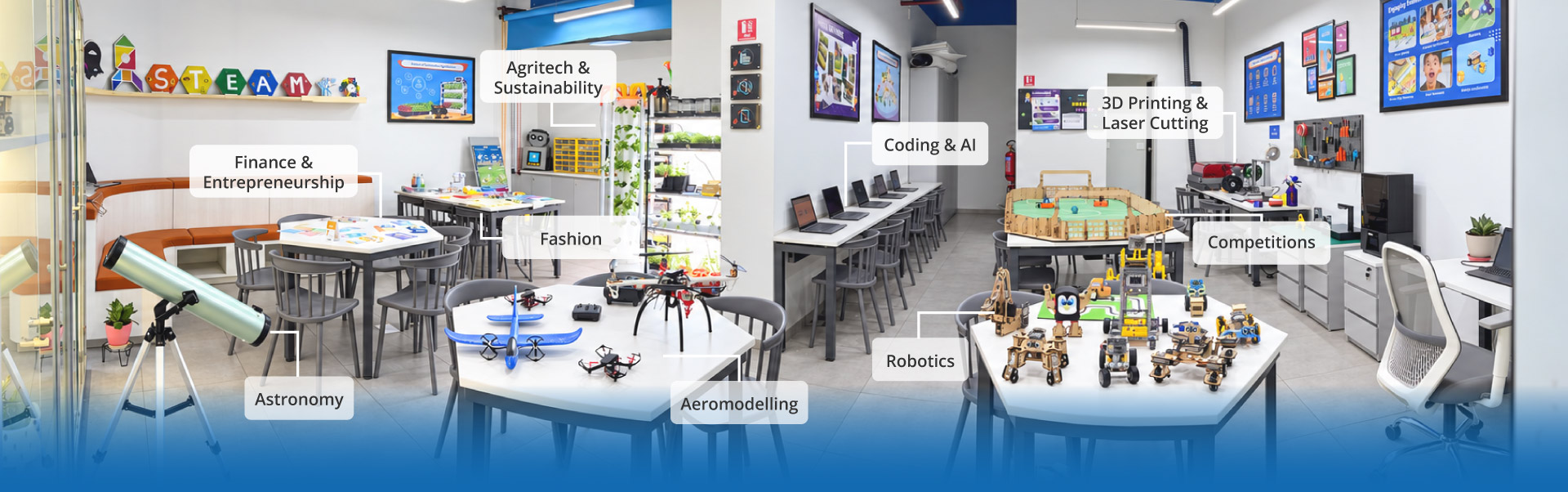
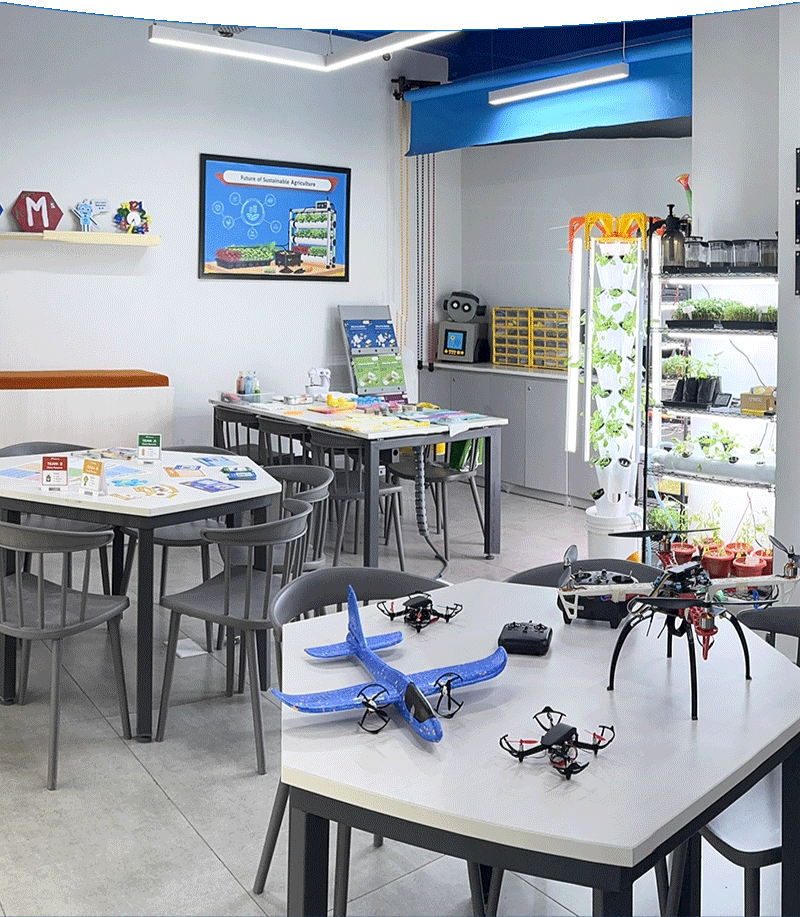
Tools and Equipment for Experiential Learning
More than equipment, these tools turn concepts into hands-on experiences. From building and testing to designing and problem-solving, they help students apply classroom learning across different skill areas.
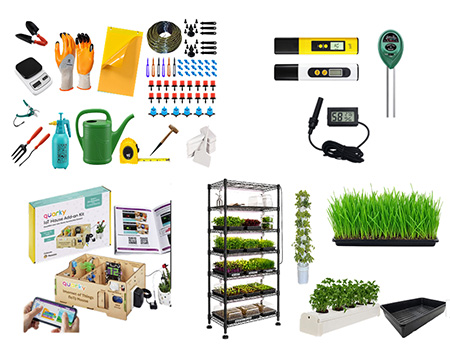
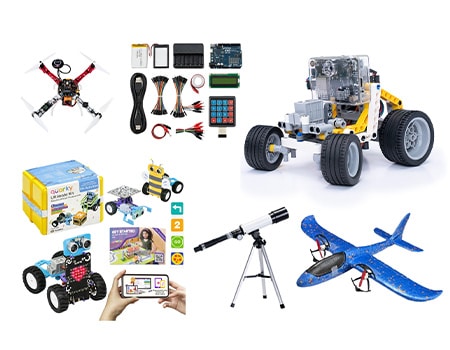
Machines and Materials
- DIY Robotics and AI Kits
- Aeromodelling & Astronomy
- Engineering, Electronics & Prototyping





Kaushal Mela: From Classroom Projects to the Global Stage
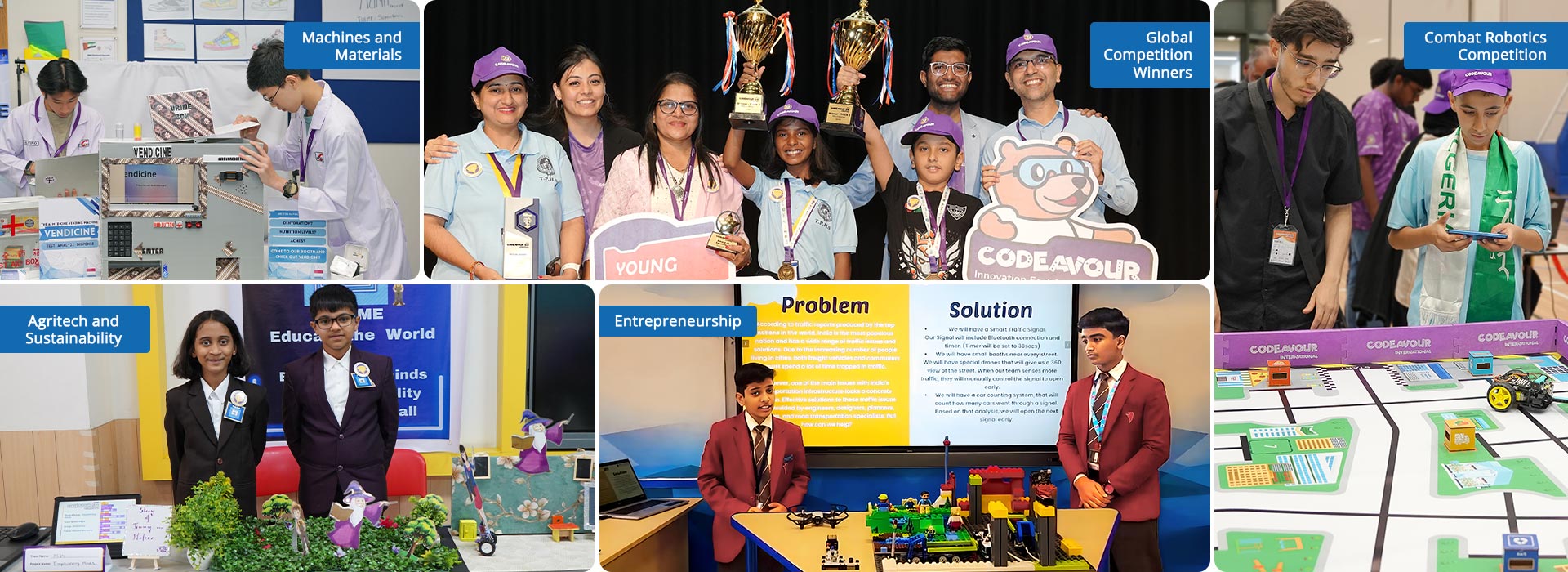
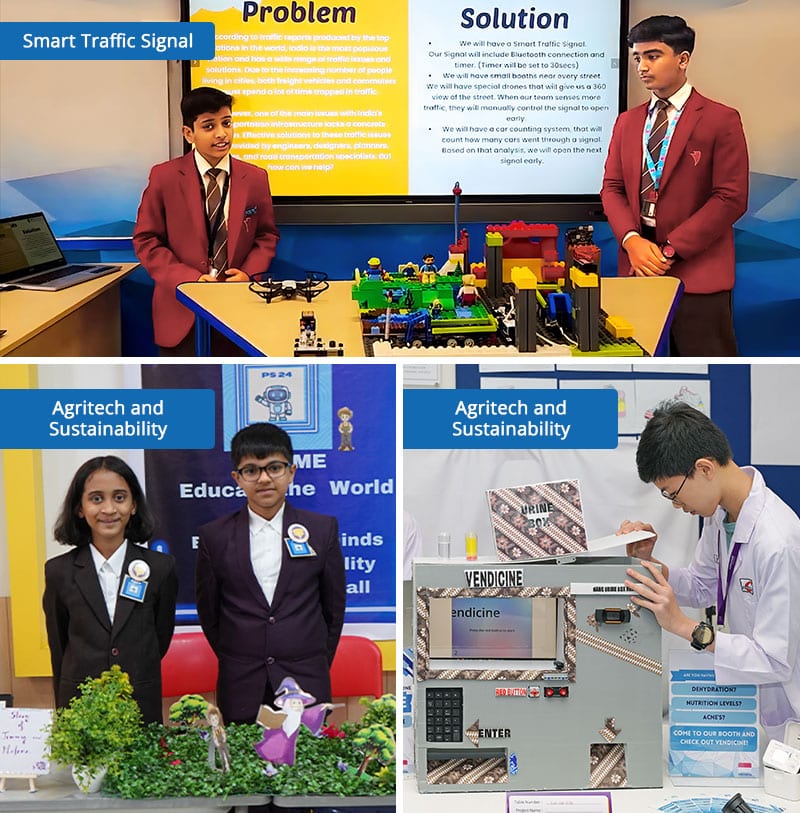
At Kaushal Mela, students showcase their projects and prototypes while building communication, presentation and entrepreneurial skills by explaining how their ideas address real-world needs. Through Codeavour, students can take their AI, coding and robotics innovations from regional competitions to national events and, the international stage.
Book your FREE Demo Today!
Ready for Composite Skill Lab? Build More Than a Lab. Build a Culture of Skill-Based Learning.
Request your Demo Today
Experience the power of AI and Robotics with us!
Discover the power of the STEMpedia ecosystem – a revolutionary Coding, AI, and Robotics solution for schools! Our educational specialists are here to show you how to harness the potential of this cutting–edge technology.
In as little as one hour, we can assign the right resources to your specific educational requirements and help unlock the countless possibilities STEMpedia provides.
Contact us for a free demonstration tailored to fit your school‘s schedule. Act now and let STEMpedia revolutionize the way you learn.
FAQs on Setting Up Composite School Lab in CBSE Schools
A Composite Skill Lab is an interactive, multidisciplinary learning space in schools where students gain hands-on experience in various skills such as STEM, Robotics, IoT, Coding, AI, 3D Printing, Arts, Design, Media, Woodworking, Automobile, Entrepreneurship, and Financial Literacy. It bridges the gap between theoretical knowledge and practical application, preparing students for real-world challenges and future careers.
The lab aligns with the National Education Policy (NEP) 2020 and the National Curriculum Framework for School Education (NCF-SE), which emphasize the integration of skill education alongside academic subjects. It aims to bridge the gap between theory and practice, preparing students with industry-relevant skills.
They provide students with practical, application-based learning experiences.
They prepare students for emerging career opportunities in technology, arts, and entrepreneurship.
They foster creativity, critical thinking, and problem-solving skills.
New Schools: Schools seeking fresh CBSE affiliation must establish the lab as mandatory.
Existing Schools: CBSE-affiliated schools must set up the lab within three years of the circular’s issue date.
- Provides practical skills aligned with industry needs.
- Enhances employment prospects in various trades and vocations.
- Offers exposure to diverse career pathways.
- Fosters entrepreneurial skills and innovation.
Lab Size:
One lab of 600 sq. ft. for classes 6-12.
Or two separate labs of 400 sq. ft. each for classes 6-10 and 11-12.
Teacher Training: Comprehensive training for teachers to teach technical skills and interdisciplinary methods.
Space Design: Versatile space with movable furniture for flexibility.
Space Distribution: Distinct zones for specific tasks (e.g., wet areas for experiments, dry areas for electronics).
Maintenance: Regular updates and maintenance of tools and equipment.
Basic Infrastructure: Power outlets, stable internet, reliable water supply, and proper ventilation.
Tools and Equipment: Robotics kits, 3D printers, computers with pre-installed software, microscopes, etc.
Smart Classroom Features: Interactive smart boards, projectors, and screens.
Storage: Lockable cabinets, shelves, and storage bins.
Safety Equipment: Fire extinguishers, first aid kits, protective gear, and safety instruction posters.
New schools: The lab must be ready before obtaining CBSE affiliation.
Existing schools: The lab must be set up within three years from the date of this circular (August 23, 2024).
Teachers will have access to structured resources and materials for effective teaching.
Schools can offer a broader range of skill subjects, providing students with more choices, resulting in developing 21st-century skills among students.
Additional details, including the required materials and setup instructions, will be available in the curriculum guidelines published on the CBSE website.
Such schools are encouraged to expand their offerings by introducing more skill subjects to provide students with additional choices.
Compliance with this directive is mandatory for both new and existing CBSE-affiliated schools. Non-compliance may affect affiliation status.
Provides hands-on, real-world learning experiences.
Translates abstract concepts into tangible skills.
Prepares students for future careers in emerging fields.
Encourages creativity, innovation, and problem-solving.
Aligns with industry needs and fosters entrepreneurial skills.
No Additional Budget Required: Schools can use existing resources.
External Funding: Explore CSR initiatives, government programs, or public-private partnerships.
Government Schools: CBSE has established labs using resources and funding from World Bank projects.
STEMpedia specializes in setting up AI, Coding, and Robotics labs and has established over 500 labs, including 40 Agile ATLs in CBSE-affiliated government schools. They offer:
Top-of-the-line Tools: Industry-standard equipment for hands-on training.
Lab Layout and Configuration: Customized layouts tailored to school needs.
Curriculum Alignment: Structured CBSE curriculum aligned with NEP 2020 and NCF 2023.
Contact organizations like STEMpedia for end-to-end support.
Plan the lab layout, infrastructure, and equipment based on school needs.
Train teachers and align the curriculum with CBSE, NEP 2020, and NCF-SE guidelines.
The key focus areas include:
Future Tech: Robotics, Coding, 3D Printing, Electronics, Electrical Work.
Arts, Design, and Media: Graphic Design, Music Production, etc.
Woodworking and Automobile: Carpentry and other practical skills.
Entrepreneurship and Financial Literacy: Business idea development, prototyping, and digital banking exercises.