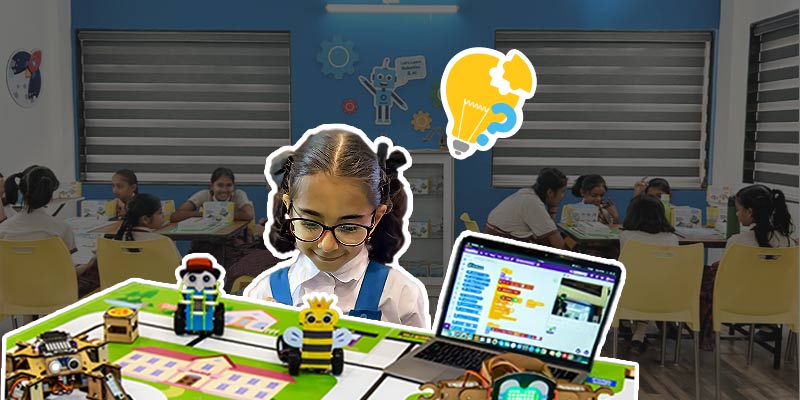
Problem-solving today isn’t about finding the right answer; it’s about learning how to respond when systems change, data behaves unpredictably, or solutions don’t work the first time. AI and Robotics Labs place students inside this reality early.
Students are not just spectators or consumers of innovations; they actually work with AI models, sensors and automated systems. The AI and Robotics lab aims to make them well-equipped to test assumptions, debug failures and improve outcomes, exactly how problem-solving works in real-world situations.
What is the AI and Robotics Lab?
An AI and robotics Lab is a dedicated learning space where students design, build, program, and test intelligent systems by combining robotics hardware, coding and AI platform. They learn tech skills through their coursebook and curriculum, as well as concepts in artificial intelligence.
An AI and robotics Lab enables students to work with real-world systems, using sensors, motors, controllers, and AI mode, to solve practical problems through experimentation, debugging, and iteration. Students learn how machines sense, decide, and act, applying concepts from programming, data, electronics, and AI in an integrated manner.
Discover Next-Gen AI and Robotics Lab for Schools
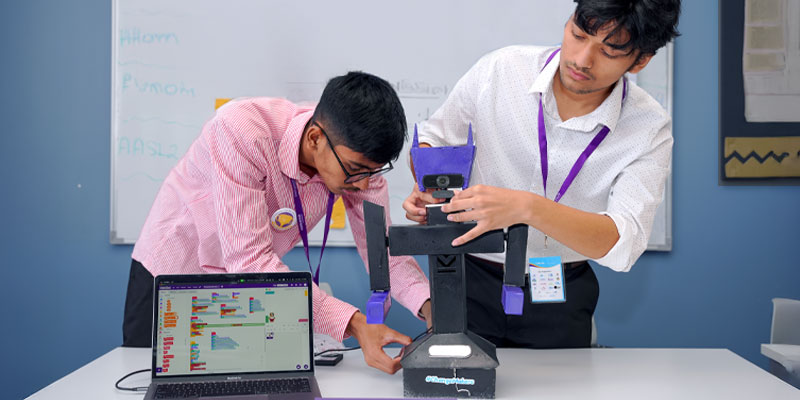
Our AI and Robotics Lab for Schools is built as a comprehensive ecosystem that goes beyond standalone hardware or software; it brings together tools, curriculum, and support to create a future-ready learning environment.
-
Holistic Learning Ecosystem
The lab combines DIY robotics kits, a coding and AI platform, practical activity books, and an annual innovation fest, enabling students to engage with technology in a structured yet creative way.
-
Next-Gen Technology Focus
Students get exposure to coding (both block-based and Python), artificial intelligence, data science, machine learning, robotics with AI, 3D and AR/VR, and automation, all within a single lab setup.
-
DIY Hardware Kits
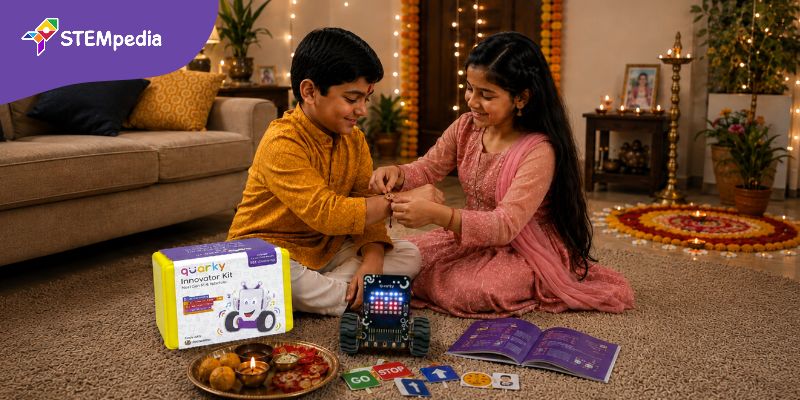
Complete hardware kits such as Quarky AI and Robotics Kits and a variety of DIY project kits (Mars Rover, Humanoid, IoT House, Robotics Arm, Mecanum Wheel Robot, and more) ensure hands-on learning and project building.
-
PictoBlox Coding and AI Platform
PictoBlox empowers students to code games, animations, and AI projects, build robotics programs, design 3D models, and create IoT solutions, all from one intuitive software interface.
-
Structured Curriculum and Resources
Grade-wise, the certified curriculum and textbooks are aligned with the CBSE and ICSE boards, ensuring systematic, syllabus-relevant learning across classes 1–10.
-
Learning Management System (LMS)
The lab includes access to a Learning Management System with lesson plans, activity sheets, slides, quizzes, assignments, and performance reports to streamline teaching and track student progress.
-
Teacher Training Programs
We provide dedicated teacher upskilling sessions and ongoing support to help educators deliver quality AI and robotics education with confidence.
-
Innovation and Competition
An annual innovation fest encourages students to solve real-world problems using their AI and robotics skills and showcase their work on a larger stage.
-
Global Reach and Proven Impact
With labs set up in 1000+ schools across 65+ countries, and over 25,000 teachers trained and 3 million students impacted, the program has a strong track record of driving technology education at scale.
From Theory to Application
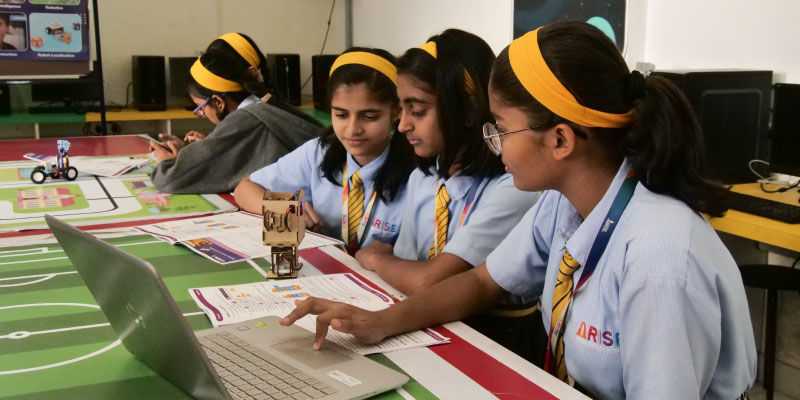
Theoretical learning explains how systems should work; practical learning shows students why they sometimes don’t. In an AI and Robotics Lab, concepts are tested against real constraints: sensor noise, hardware limitations, data errors, and system dependencies. This shift from ideal conditions to real environments is where meaningful problem-solving begins.
Students’ Projects that Address Real-World Problems
Projects like these help students see how coding, math, physics, AI and design work together to solve real problems. The process of learning practically makes it more meaningful and noteworthy.
Core Skill Areas Developed Through AI and Robotics Labs
1. Problem-Solving and Computational Thinking
Students learn to break complex problems into smaller parts, apply logical sequencing, and build step-by-step solutions through testing and iteration. This shifts learning from finding “right answers” to designing workable solutions.
2. AI, Data and Digital Literacy
Hands-on experience with AI, sensors, coding, and automation helps students understand how intelligent systems work and shape society, creating informed and responsible tech users.
3. Critical Thinking, Debugging and Resilience
By diagnosing failures, testing variables, and refining systems, students develop analytical thinking, perseverance, and confidence in handling uncertainty, skills essential beyond academics.
4. Creativity, Innovation and Design Thinking
Open-ended projects encourage experimentation, multiple solution paths, and creative application of technology, reinforcing that innovation is as much about thinking as it is about tools.
5. Collaboration, Leadership and Ethical Awareness
Team-based projects build communication, leadership, accountability, and ethical judgment as students work on real-world challenges across healthcare, sustainability, and smart systems.
From Classroom Learning to Real-World Solutions
This is the kind of learning that solves real-world problems, AI and robotics projects that turn classroom learning into meaningful, real-world innovation. Have a look at a few examples of the Winners of the International Coding Competition, Codeavour.
Sindoora Raja—Winner of Pradhan Mantri Rashtriya Bal Puruskar

Sindhoora Raja, at just 15 years old, has proven that age is no barrier to brilliance. Hailing from Ullal, Mangaluru, and now pursuing her education in Bengaluru, she stands tall as an innovator. She was also felicitated with the Pradhan Mantri Rashtriya Bal Puraskar for her innovation, Healix: a self-stabilising device for Parkinson’s patients.
Reyaansh Dhaagle – A Bright Mind Innovated Award-Winning Solution for Environmental Hazard Surveillance
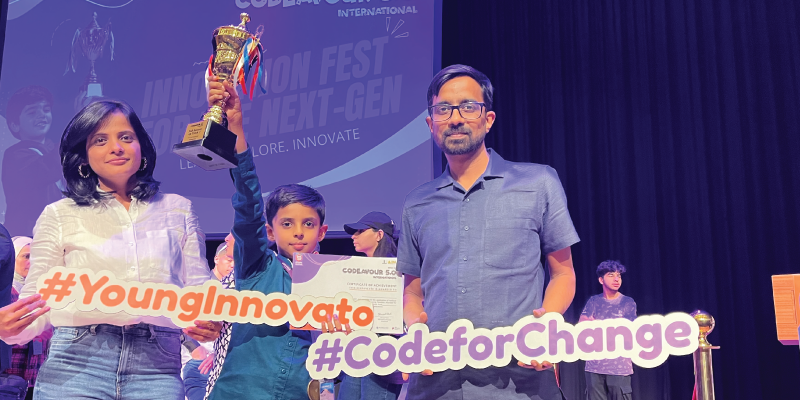
With a curious mind for technology and a heart set on helping others, 9-year-old Reyaansh Dhaagle from Indus International School, Bangalore, is already making waves. His compassionate vision not only solves a real-world problem but also secured his victory at Codeavour 5.0.
Samriddhi Rajesh Kori and Swara Bhavi
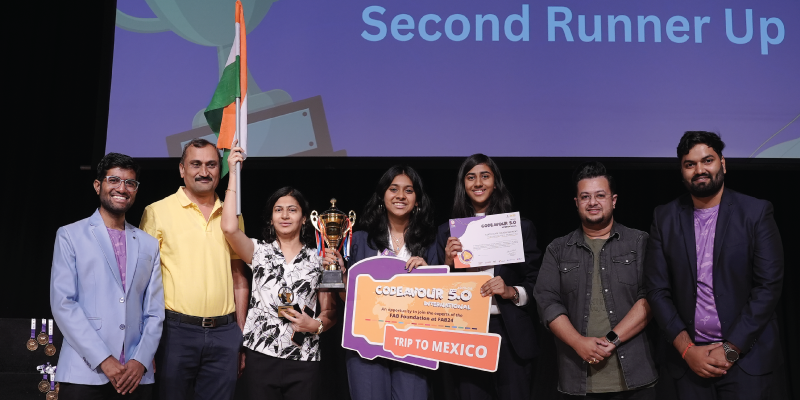
Bangalore-based innovators Samriddhi Rajesh Kori and Swara Bhavi, both 18, have propelled drone technology forward with their groundbreaking multi-functional project, Drone Acharya. Samriddhi’s unparalleled success—winning Codeavour International four years in a row (2020-2023)—paved the way for her role as a mentor in 2024, where she led another team to victory at Codeavour 6.0 international in Doha, Qatar.
Teacher Training for Seamless Lab Integration
A successful AI and Robotics Lab starts with confident teachers. Our program prioritises teacher enablement to ensure smooth adoption and effective classroom delivery.
Certified AI trainers conduct 2-5 days of onsite training for computer science teachers, STEM faculty, and IT staff, focusing on hands-on learning in coding, AI, and robotics through project-based methodologies.
Teachers gain practical experience with modern tools, curriculum-aligned skill training, and guidance for implementing PBL effectively. The program is recognised as Continuous Professional Development (CPD) under NEP 2020, which mandates at least 50 hours of CPD annually for all teachers. Post teacher training completion, the teacher gets certified with ARTPARK and STEMpedia–accredited certification.
Set Up an AI and Robotics Lab in Your School
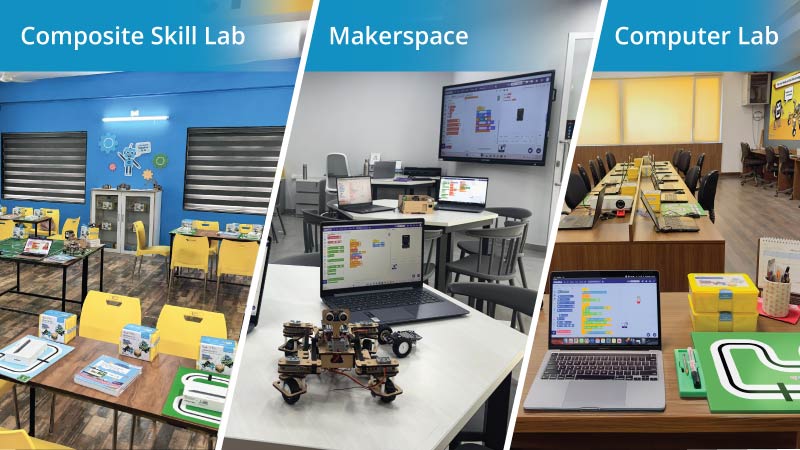
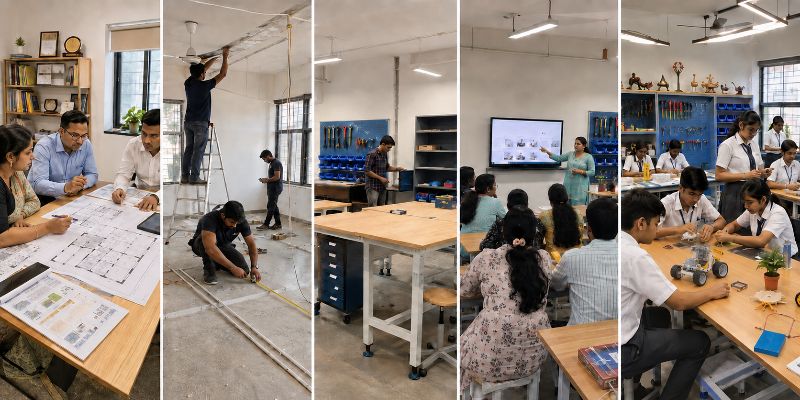
At STEMpedia, we accommodate diverse infrastructures. Our AI and Robotics Lab can be deployed in existing facilities, such as computer labs, makerspaces, or multipurpose classrooms. This flexible approach provides structured AI and robotics training, ensuring broader access to hands-on STEM education.
Schools don’t need excessive infrastructure to begin. A well-equipped lab typically includes:
- Beginner-friendly DIY robotics kits
- AI and coding software
- Basic tools and assembly materials
- A structured curriculum with lesson plans
- Course and practical activity books
- Teacher training and ongoing academic support
STEMpedia’s AI and Robotics Lab is a holistic ecosystem that integrates these elements into a ready-to-implement solution for schools.
Book Your Free Demo for AI and Robotics Lab
In a Nutshell
Robotics and AI programs are not classroom gimmicks; they’re a powerful learning tool. By allowing students to design, build, fail, fix and try again, AI and robotics labs help shape confident, independent problem-solvers.
With the right blend of curriculum, tools, and teacher support, platforms like STEMpedia’s AI and Robotics Lab empower schools to move beyond theory. Therefore, preparing students for an innovation-driven future.