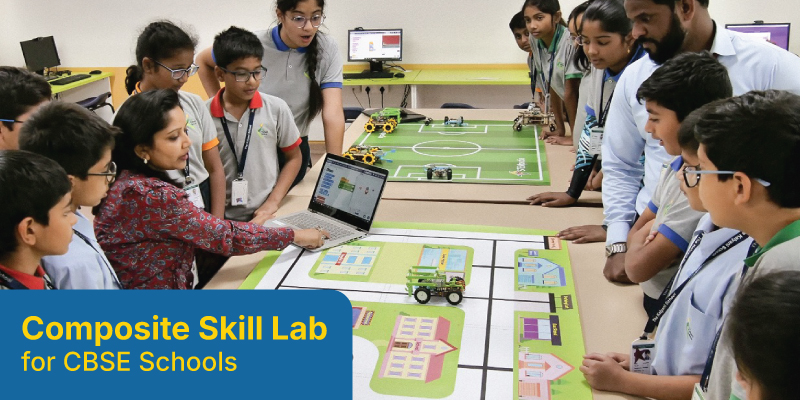
A Composite Skill Lab is a multi-functional skill education space recommended by the Central Board of Secondary Education (CBSE) to support vocational learning for students from Classes VI to XII.
The Three Core Skill Areas
- Work with Life Forms
- Work with Machines and Materials
- Work in Human Services
Schools should plan the lab by selecting relevant skill subjects, creating a flexible modular layout, ensuring proper safety infrastructure, integrating digital and AI tools, allocating approximately 110 hours annually for vocational learning where applicable, and connecting activities with local industries and real-world projects.
Reference:
How to Set Up a Composite Skill Lab in Schools by 2027?
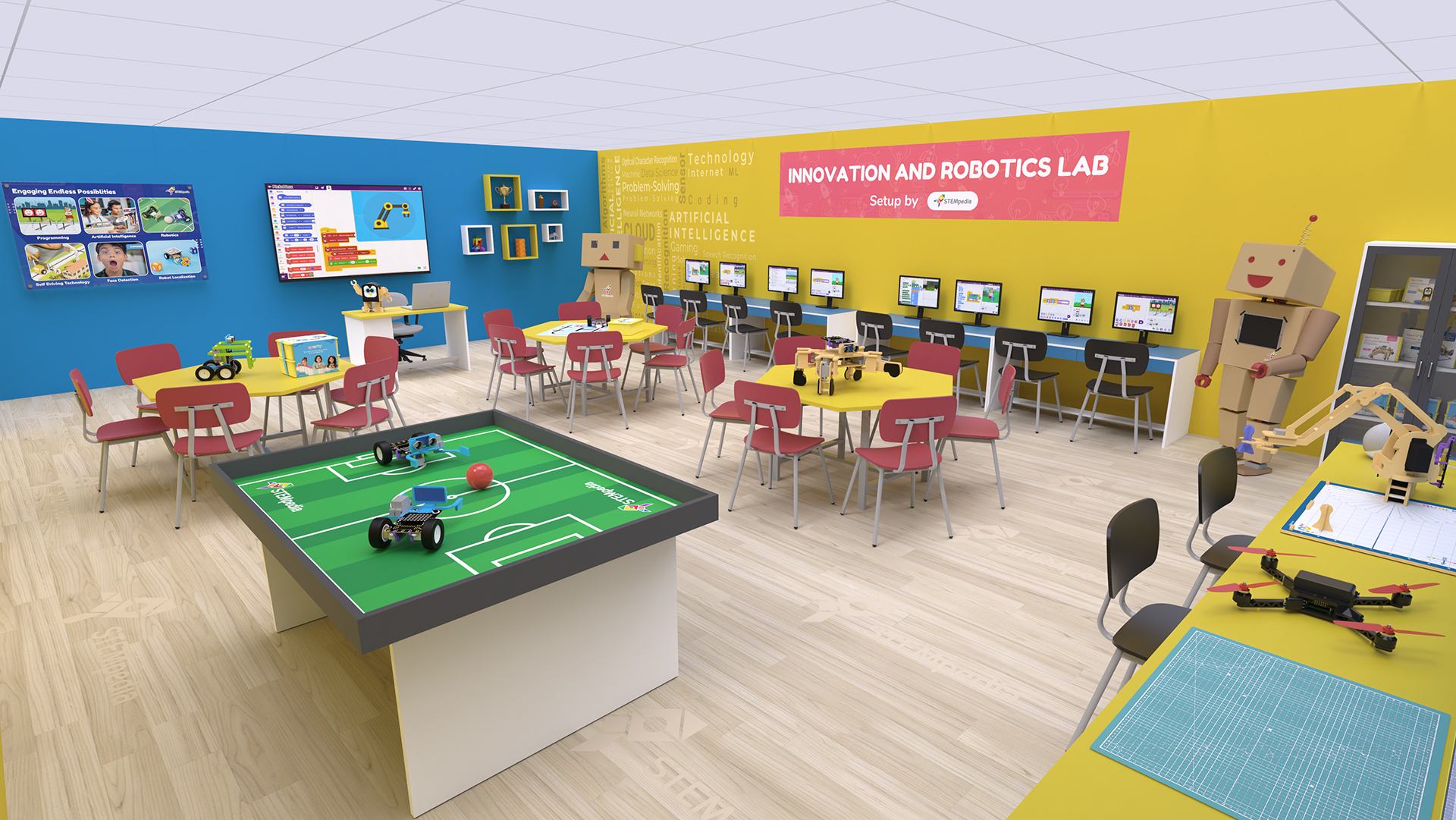
India’s school education system is moving steadily towards hands-on, skill-based, and future-ready learning, and the Composite Skill Lab (CSL) is now at the center of that shift. Under the latest CBSE direction aligned with National Education Policy 2020 and NCF-SE 2023, schools are encouraged to establish Composite Skill Labs to support skill education for Classes VI to XII.
The goal is not simply to add another room on campus, but to create a structured, flexible, and practical learning environment where students can explore different forms of work, build real-world skills, and connect classroom concepts with application.
For school leaders, this creates both a compliance responsibility and a strategic opportunity. A well-designed Composite Skill Lab can strengthen your school’s academic positioning, improve experiential learning outcomes, support interdisciplinary teaching, and make your institution more relevant in a rapidly changing world. Schools that plan early will be in a far better position than those that wait until implementation becomes urgent.
Why Composite Skill Labs Matter Now?
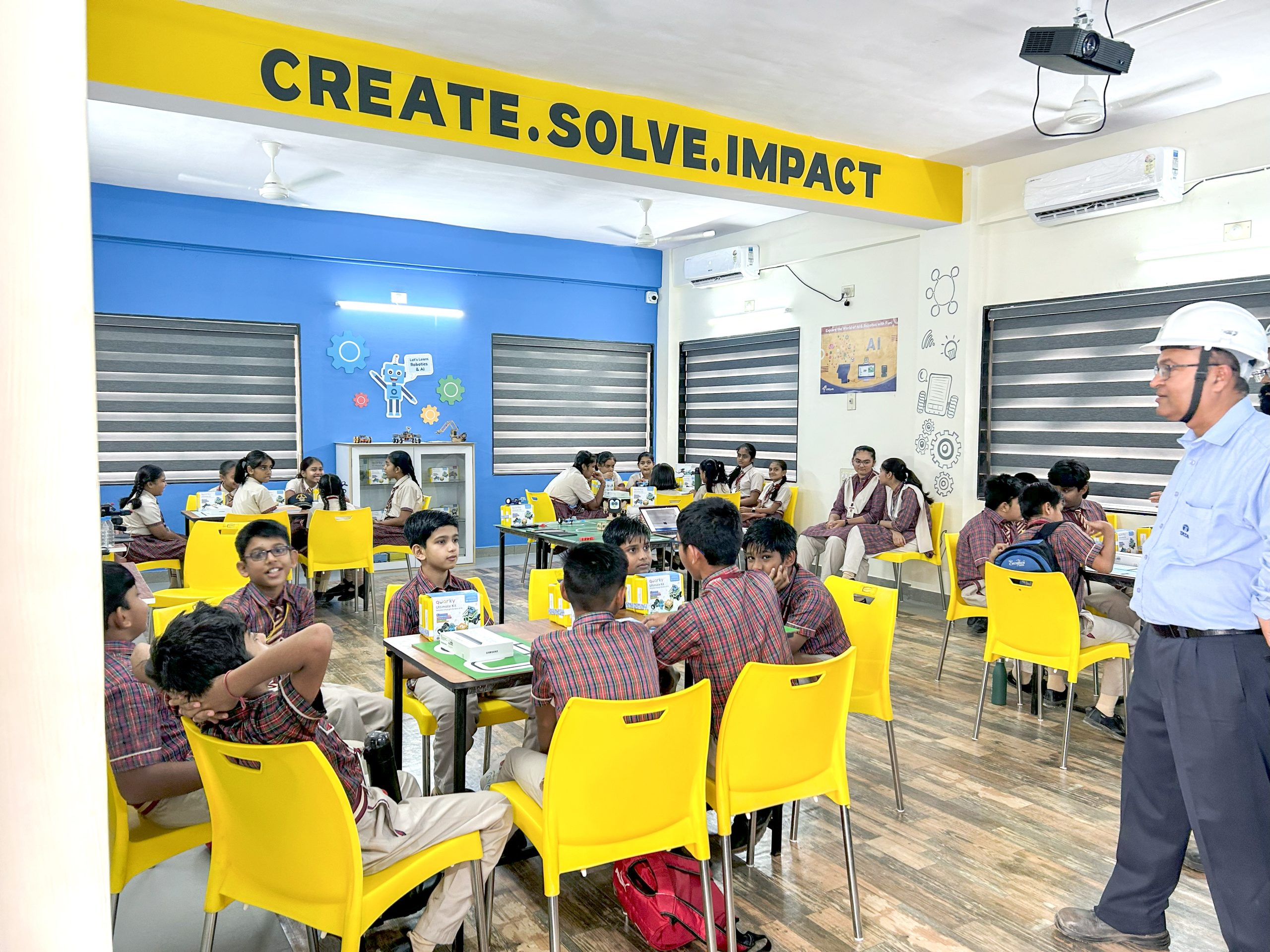
The Composite Skill Lab is rooted in a clear national policy direction. NEP 2020 emphasises integrating vocational education into mainstream schooling, removing the traditional divide between academic and skill-based learning, and ensuring that students are exposed to practical work from the middle grades onwards. The CBSE guideline booklet makes it clear that the lab is a direct institutional response to this vision.
The policy expectation is significant. By the middle and secondary stages, students are expected to engage in meaningful projects, practical exposure, and skill-building across multiple domains rather than learn only through textbooks. This makes the CSL a foundational infrastructure requirement for schools that want to remain aligned with the future of school education.
What Composite Lab Means for Schools
A Composite Skill Lab should not be treated as:
- a rebranded computer room
- an unused activity room
- a storage-heavy workshop with no learning design
- or a one-sector robotics corner
Instead, it should function as a multi-sector skill-learning ecosystem that helps students make, test, build, observe, create, present, and reflect.
That is the real spirit of the mandate.
What is a Composite Skill Lab?
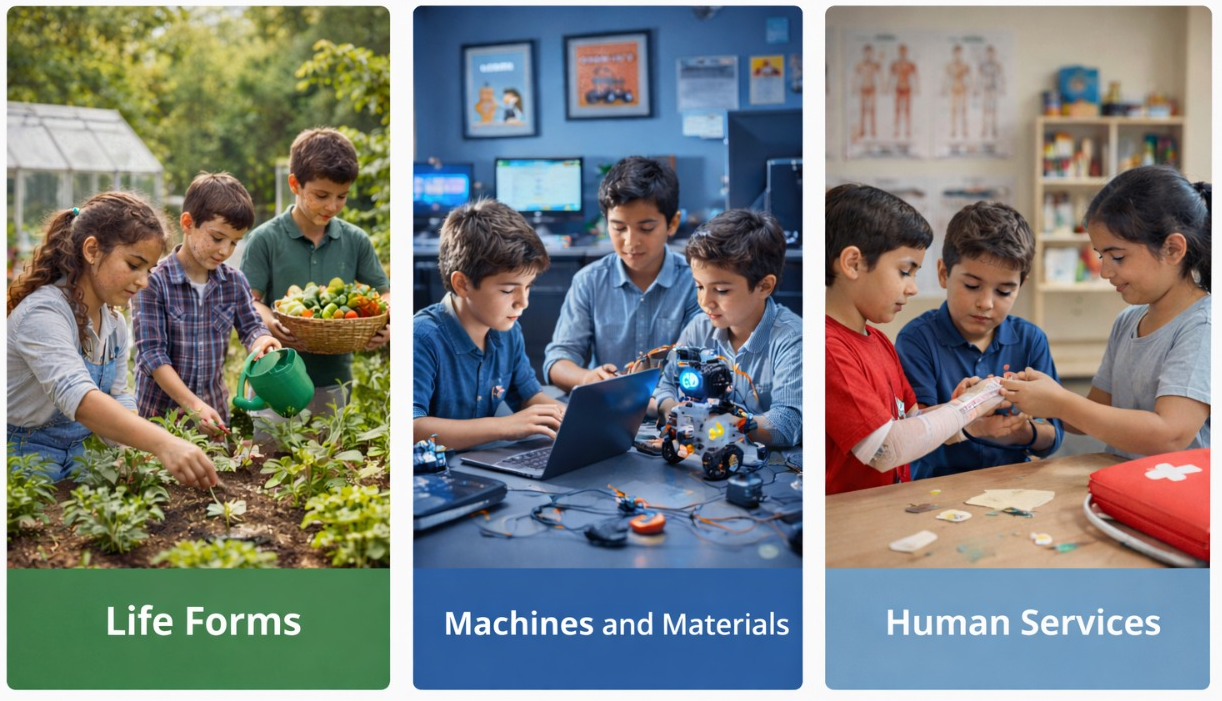
A Composite Skill Lab is a single flexible lab space that supports skill education across multiple sectors. Rather than creating separate labs for each vocational area, CBSE’s approach allows schools to use one well-planned space to expose students to different skills and vocations efficiently. The guidelines present the CSL as a multi-functional, inclusive, and flexible learning environment that supports practical learning across various sectors and the three forms of work defined in NCF-SE 2023.
The lab is designed to deliver learning across:
Life Forms | Machines and Materials | Human Services
This ensures that students receive balanced exposure to different types of work, preparing them for a wide range of future opportunities.
Three Core Areas a Composite Skill Lab Should Aim to Support
As per the guidelines and the NCF-SE 2023 framework, schools should aim to ensure exposure across the following Areas:
1. Work with Life Forms
- Agriculture
- Gardening
- Floriculture
- Nursery-related activities
etc.
This domain focuses on developing an understanding of nature, sustainability, and biological systems. It helps students build awareness about environmental responsibility and introduces them to careers related to agriculture, ecology, and life sciences.
2. Work with Machines and Materials
- Electronics
- Mechatronics
- Robotics
- Woodwork
- Electrical work
- Design and fabrication
etc.
This domain develops technical skills, logical thinking, and problem-solving abilities. Students learn how systems work, how to build and repair things, and how to apply engineering concepts in real-world scenarios.
3. Work in Human Services
- Healthcare
- Retail
- Hospitality
- Service-oriented skills
etc.
This domain focuses on people-centric skills such as communication, empathy, service delivery, and professionalism. It prepares students for roles in service industries and helps them understand real-world human interactions.
This three-part structure is important. Schools are encouraged to gradually include exposure across all domains rather than limiting themselves to a single area. A balanced approach ensures holistic skill development.
CBSE Composite Skill Lab Mandate: What Schools Need to Know?
The Central Board of Secondary Education strongly recommends the setting up of Composite Skill Labs for affiliated schools, particularly those offering vocational education or applying for new affiliations. The guideline also ties the lab directly to the delivery of multi-sector skill education from Classes VI to XII.
The CSL is therefore not just an optional enhancement but an important part of aligning with modern educational expectations and national policy direction.
Key Implementation Expectations for Schools
Schools should plan for:
- Skill education from Classes VI to XII
- Around 100–110 hours annually in the timetable for vocational education where implemented
- Appropriate staffing and teacher preparation
- Skill delivery across the three domains
- Safety, layout, and basic infrastructure
- Contextually relevant sector selection
This means that the Composite Skill Lab is not just an infrastructure checkbox. It is part of a larger teaching-learning model that emphasizes experiential learning.
How to Set Up a Composite Skill Lab in Schools: Step-by-Step
This guide explains exactly how to set up a Composite Skill Lab in schools by 2027, including planning, layout, space, equipment, safety, AI integration, staffing, budgeting, and execution.
Step 1: Start with Skill Mapping, Not Furniture
The guideline clearly places identifying relevant skill subjects and activities as the first step in setting up the lab. Schools are advised to choose multiple relevant skill subjects (commonly around six over a period, depending on implementation) based on local context, student aspirations, available resources, and future relevance.
Before purchasing any equipment, schools should carefully analyze student interests, local opportunities, and industry connections. This ensures that the lab is not only functional but also meaningful and sustainable.
A thoughtful skill mapping process helps schools avoid unnecessary expenses and ensures better utilisation of the lab.
Step 2: Ensure the Right Space and Room Readiness
The guideline specifies that schools should identify:
- one room of a minimum of 600 sq. ft, or
- two rooms of a minimum of 400 sq. ft each
The space should be large enough to accommodate group work, movement, and multiple activities simultaneously. Proper ventilation, lighting, and electrical setup are essential for a safe and productive environment.
A well-prepared room forms the foundation of an effective Composite Skill Lab.
Step 3: Design a Modular Lab Layout
A modular layout allows flexibility. Schools can rearrange workstations, introduce new sectors, and adapt the space as needed. This makes the lab future-ready and scalable.
Zones such as teaching areas, workbenches, storage, and safety corners should be clearly defined. Proper layout planning improves workflow, safety, and overall efficiency.
Step 4: Install the Right Infrastructure
Flooring should be durable and safe. Electrical fittings should be properly installed, and lighting should be sufficient for detailed work. If required, water facilities should also be included.
Ignoring these basics can lead to long-term operational challenges.
Step 5: Choose Furniture That Supports Practical Learning
Furniture should encourage collaboration and hands-on work. Group tables, movable seating, storage units, and tool boards are essential components of an effective lab setup.
The goal is to create a space that supports active learning rather than passive observation.
Step 6: Procure Equipment Based on Skill Areas
Equipment should be selected based on chosen sectors. Schools should avoid random purchases and instead focus on structured procurement aligned with their skill mapping plan.
This ensures cost efficiency and better utilisation.
Step 7: Integrate AI and Digital Infrastructure for Future-Ready Learning
The guideline highlights the importance of integrating digital tools and artificial intelligence into the Composite Skill Lab. While not mandatory, AI integration is strongly encouraged to prepare students for future careers.
Students can engage in coding, data analysis, automation, and smart projects. This enhances their understanding of modern technologies and improves problem-solving skills.
Step 8: Build Safety into the Lab from Day One
Safety should be an integral part of the lab setup. Schools must provide safety equipment, display instructions, and train students in proper usage of tools.
Regular monitoring and supervision are essential to maintain a safe environment.
Step 9: Plan Timetable and Usage
Skill education requires dedicated time. Schools implementing vocational education should allocate around 100–110 hours annually and ensure that practical sessions are prioritised.
Proper scheduling ensures that the lab is actively used and not underutilised.
Step 10: Prepare Teachers and Support Staff
Teachers play a critical role in the success of the Composite Skill Lab. Proper training, planning, and support are essential.
Schools may also involve external experts to enhance learning experiences.
Step 11: Connect with Industry and Community
Real-world exposure is a key component of skill education. Schools should establish connections with local industries and professionals to provide students with practical insights and opportunities.
Step 12: Budget and Implement in Phases
Setting up a Composite Skill Lab requires investment, but it can be done in phases. Schools can start with basic infrastructure and gradually expand.
An indicative budget may range from ₹3 lakh to ₹6 lakh, depending on the scale and requirements.
STEMpedia | Upskilling Teachers for Vocational Excellence
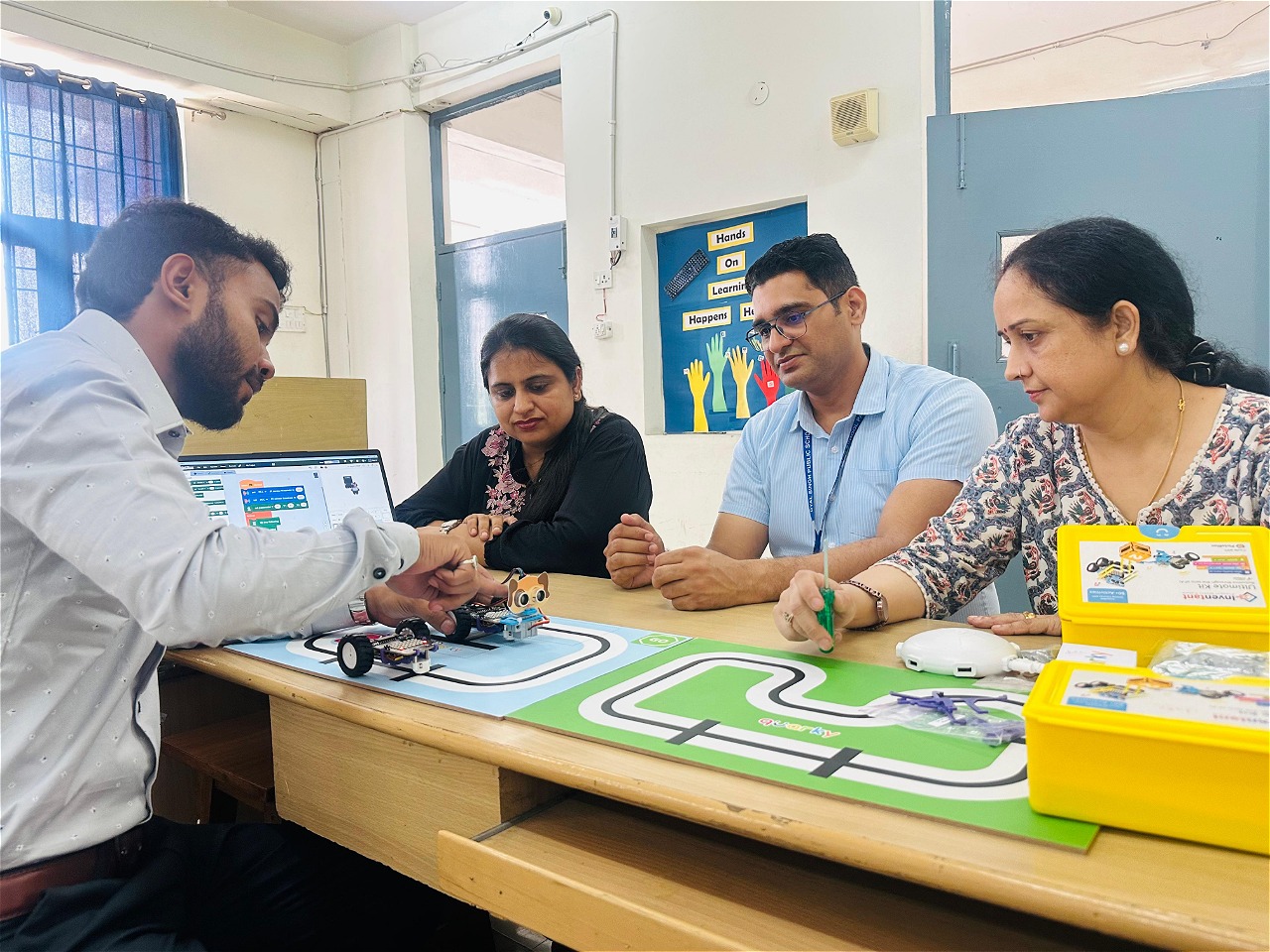
A room full of tools is only useful if the teachers know how to use them. At STEMpedia, we make sure your staff feels confident and ready to lead these new classes from day one.
Here is how we help your teachers get comfortable with the Composite Skill Lab:
- Learning by Doing: We walk teachers through every piece of equipment—from 3D printers and robots to basic electronics—so they can fix things and show students exactly how they work.
- Making Lessons Fun: We show teachers how to move away from boring lectures and instead lead “mini-projects” where students actually build and create things.
- Managing the Clock: We help your team figure out how to fit these 110 hours of skill training into the school year without it feeling like a burden.
- Safety First: We teach staff how to keep the lab organized and ensure every student stays safe while using tools and machines.
Think of STEMpedia as your school’s partner. We stay with you to make sure your teachers aren’t just “watching” the lab, but actually running it like pros.
Frequently Asked Questions
Is a Composite Skill Lab mandatory for all CBSE schools?
The Central Board of Secondary Education strongly recommends it, especially for schools offering vocational education.
What is the minimum room size?
600 sq. ft or two rooms of 400 sq. ft each.
What is the estimated budget?
₹3–6 lakh (indicative).
Is AI integration required?
Not mandatory but recommended.
In a Nutshell
A Composite Skill Lab represents a shift towards practical, skill-based, and future-ready education. It bridges the gap between theory and application and prepares students for real-world challenges.
Schools that invest in a well-planned Composite Skill Lab today are taking a significant step toward aligning with modern educational practices and future workforce needs.