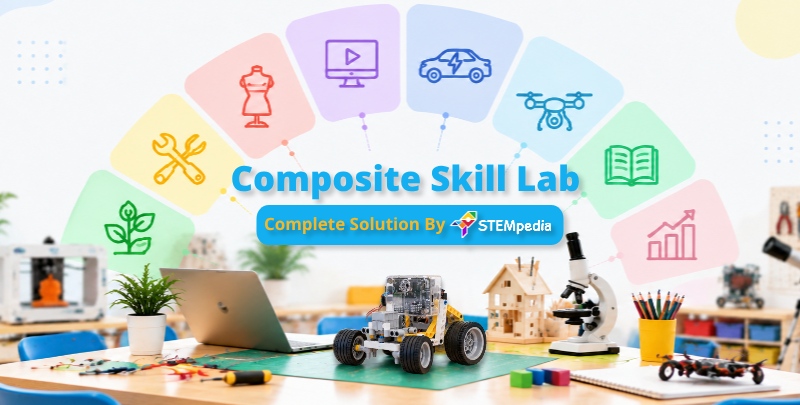
As schools prepare to establish a CBSE Composite Skill Lab (CSL), one important question arises:
How can schools create a skill-learning environment that goes beyond infrastructure and delivers meaningful student outcomes?
A successful Composite Skill Lab is not created by simply setting up a room with equipment. It requires a combination of:
- Purpose-built infrastructure
- Structured curriculum
- Practical learning activities
- Appropriate tools and technology
- Teacher training
- Continuous implementation support
- Student project showcases
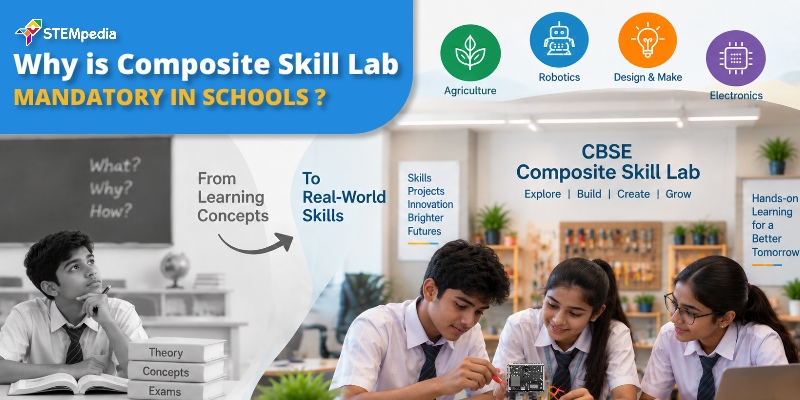
A CSL helps students move beyond theoretical understanding and experience learning through:
Building → Creating → Testing → Improving
STEMpedia’s Composite Skill Lab ecosystem brings these elements together to help schools implement a structured, future-ready skill education environment aligned with NEP 2020, NCF-SE 2023, and CBSE’s vision for practical learning.
Explore STEMpedia’s Composite Skill Lab ecosystem with AI, Robotics, Agriculture, Entrepreneurship, Curriculum, and Teacher Support.
The STEMpedia CSL ecosystem combines:
- Infrastructure planning
- Multidisciplinary curriculum
- AI and Robotics integration
- Tools and equipment
- Teacher readiness programs
- Digital learning resources
- Project-based learning
- Student showcase opportunities
The objective is not only to help schools establish a CSL but also to create a sustainable learning environment where students continuously explore skills and apply knowledge to real-world challenges.
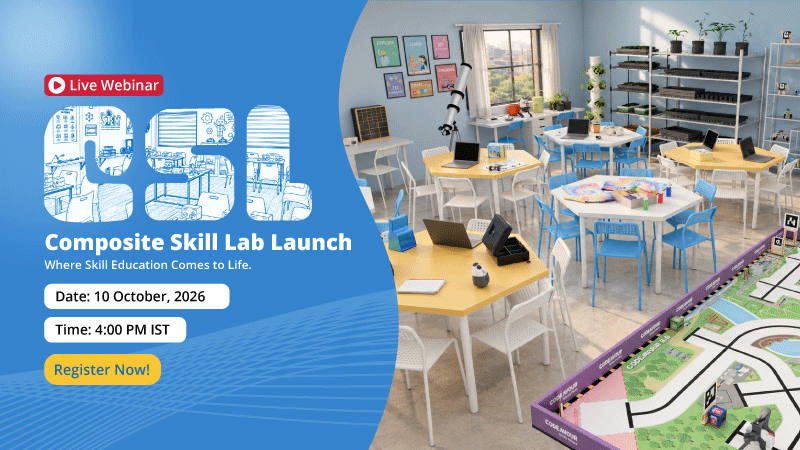
Click here to register and join our live session to understand setup, curriculum, activities, and implementation approach for CBSE schools.
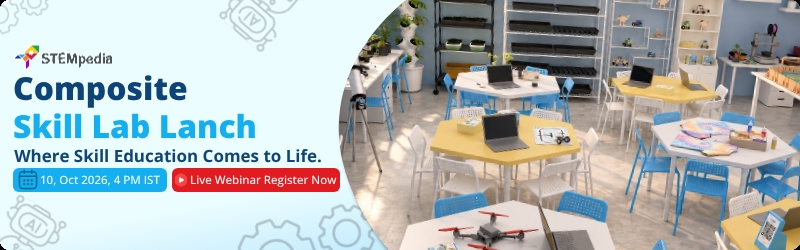
What Is a Composite Skill Lab?
A Composite Skill Lab (CSL) is a multidisciplinary learning environment where students develop practical skills through:
- Hands-on activities
- Project-based learning
- Real-world problem-solving
- Skill exploration
- Interdisciplinary projects
Unlike a traditional classroom where students mainly learn concepts, a CSL allows students to apply those concepts by creating solutions.
Students can:
- Build prototypes
- Work with tools and materials
- Program systems
- Explore agricultural technologies
- Understand financial concepts
- Develop entrepreneurial thinking
Aligned with NEP 2020, NCF-SE 2023, and CBSE’s Composite Skill Lab framework, a CSL brings multiple skill areas together into one flexible learning environment.
The focus is:
Learn → Explore → Build → Apply → Create
CBSE’s Composite Skill Lab framework defines the need for dedicated infrastructure that supports practical skill education. However, establishing a successful CSL requires more than creating a physical room.
Schools also need:
- Appropriate curriculum
- Trained educators
- Practical activities
- Regular student engagement
- Long-term implementation planning
This is where a complete ecosystem approach becomes important. To understand the CSL framework in detail, read:
What Is a Composite Skill Lab? A Complete Beginner’s Guide for CBSE Schools
Why Schools Need More Than an Equipment Vendor
Setting up a Composite Skill Lab is not only about purchasing equipment.
A room filled with tools does not automatically create skill-based learning.
Students benefit when infrastructure works together with:
- A structured curriculum
- Trained teachers
- Suitable activities
- Project-based learning
- Continuous support
A successful CSL should answer important questions:
- What will students learn?
- How will teachers conduct activities?
- How will projects progress from beginner to advanced levels?
- How will students demonstrate their skills?
STEMpedia’s approach focuses on building the CSL as an integrated learning ecosystem rather than a one-time infrastructure setup.
The ecosystem connects:
- Infrastructure planning
- Curriculum design
- Technology resources
- Teacher training
- Assessment support
- Student showcases
This helps schools move from simply establishing a lab to creating a sustainable learning environment where students regularly engage in practical skill development.
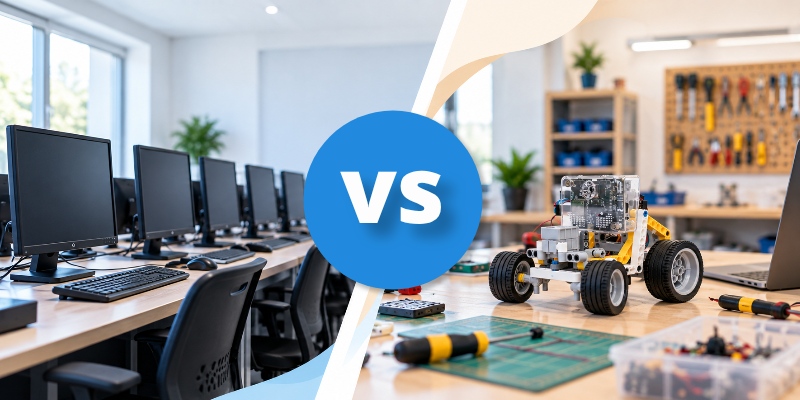
How Schools Can Use ATL, IT Labs, and Makerspaces for CBSE Composite Skill Lab Setup
The Three Forms of Work — STEMpedia’s CSL Model
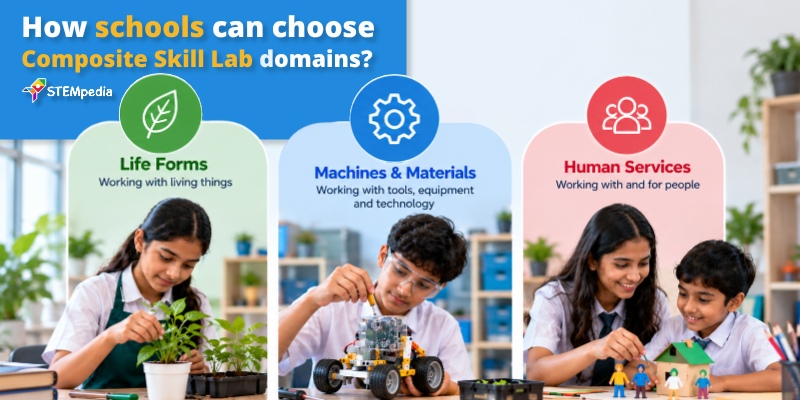
NCF-SE 2023 structures skill education around three broad Forms of Work.
A Composite Skill Lab should provide students with exposure across:
- Work with Life Forms
- Work with Machines and Materials
- Work in Human Services
STEMpedia’s CSL model connects these three areas through practical projects and industry-relevant learning pathways.
1. Work with Life Forms — Agriculture 4.0
This area focuses on understanding and working with living systems through modern agricultural practices.
Students explore:
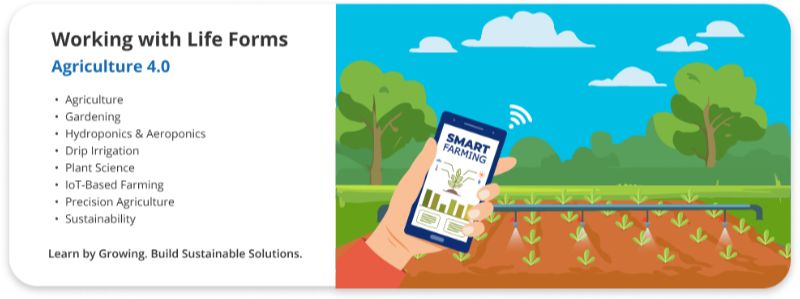
Students can learn how technology can improve traditional practices by working on projects involving:
- Smart monitoring systems
- Automated irrigation
- Plant care solutions
- Sustainable farming techniques
This connects biological understanding with technology and problem-solving.
2. Work with Machines and Materials — AI, Robotics and ICT
This area focuses on technology, engineering, and making.
Students explore: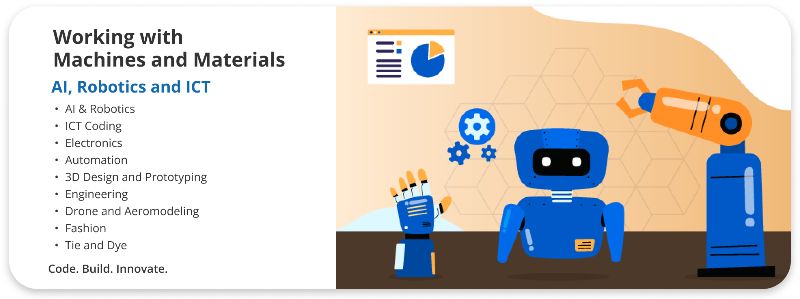
Through practical projects, students learn to:
- Design solutions
- Build prototypes
- Program systems
- Work with electronics
- Test and improve designs
AI and Robotics become part of a broader skills-learning journey where students learn how technology can solve real-world challenges.
3. Work in Human Services — Finance and Entrepreneurship
This area introduces students to service-oriented skills and entrepreneurial thinking.
Students explore:
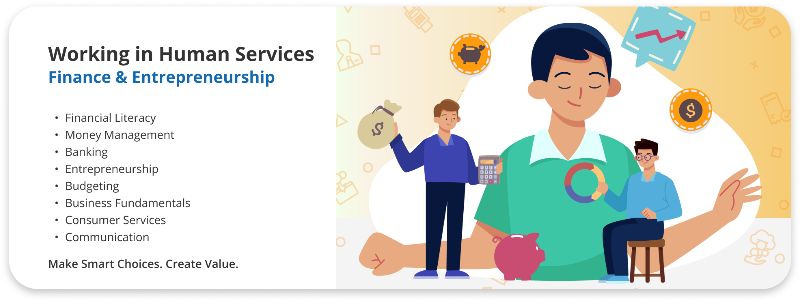
Students learn how ideas can be transformed into useful services and solutions through activities related to:
- Financial decision-making
- Business planning
- Enterprise simulations
- Customer understanding
Together, these three Forms of Work create a balanced learning environment where students experience technology, practical work, creativity, and real-world applications.
For a detailed guide on selecting CSL skill areas, read:
How Should a School Choose Its Three CSL Domains?
Curriculum Structure and Annual Learning Timeline
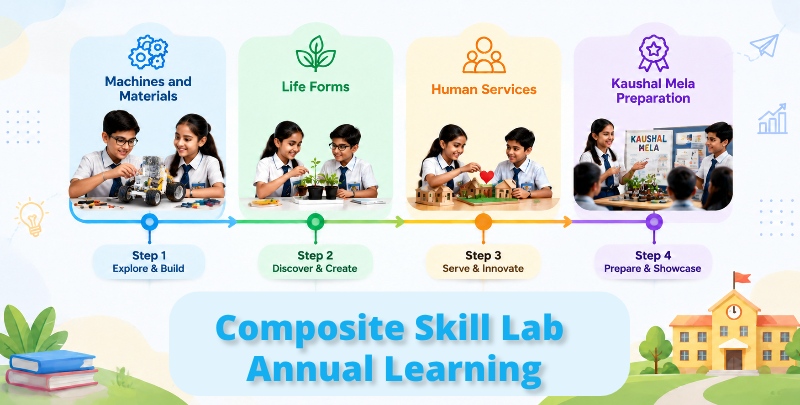
STEMpedia proposes a curriculum model based on:
- Regular weekly sessions
- Project-based learning
- Coverage across all three Forms of Work
- Final student showcase
The annual structure includes:
| Component | Sessions per Year |
| Machines and Materials | 50 |
| Life Forms | 20 |
| Human Services | 20 |
| Kaushal Mela Preparation | 10 |
Through this structure, students experience different skill areas throughout the year while working towards creating practical outcomes.
Each phase follows a learning progression:
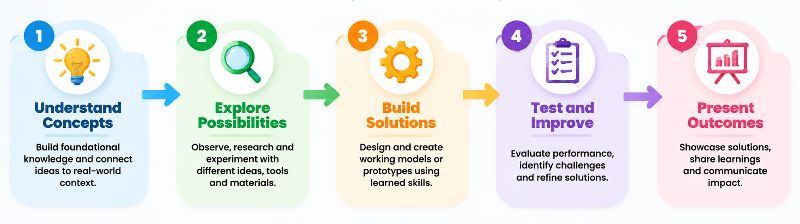
This ensures that students not only complete activities but develop the ability to apply skills independently.
Kaushal Mela — Where Learning Becomes Visible
Skill education becomes more meaningful when students get opportunities to demonstrate what they have created.
STEMpedia’s Composite Skill Lab model concludes the yearly learning journey with Kaushal Mela — a platform where students showcase their projects, ideas, and practical skills.
The journey follows:
Learn → Build → Create → Present
During Kaushal Mela, students can present:
- Robotics projects
- Agriculture solutions
- Technology prototypes
- Entrepreneurship ideas
- Financial literacy activities
- Interdisciplinary projects
The event helps students develop additional skills such as:
- Communication
- Presentation
- Collaboration
- Confidence
- Problem-solving
Rather than being a standalone exhibition, Kaushal Mela becomes the natural outcome of continuous project-based learning throughout the academic year.
STEMpedia has conducted regional showcases, providing schools with a structured approach to celebrating student innovation and practical achievements.
What Makes STEMpedia Different from a Standard CSL Vendor?
When schools evaluate Composite Skill Lab providers, the most important difference is not only the equipment supplied.
The key question is:
Will the school receive only infrastructure, or a complete system that enables continuous learning?
STEMpedia’s CSL approach focuses on creating a complete educational ecosystem.
1. Complete Ecosystem Approach
Instead of providing only tools and equipment, STEMpedia connects:
- Infrastructure planning
- Curriculum
- Technology resources
- Teacher training
- Assessment support
- Student showcases
This helps schools move from setting up a lab to running a sustainable skill-learning program.
2. Curriculum Aligned with Three Forms of Work
STEMpedia’s curriculum is structured around:
- Work with Life Forms
- Work with Machines and Materials
- Work in Human Services
This allows schools to provide students with exposure across multiple skill areas rather than focusing on only one technology domain.
3. AI and Robotics Expertise
With STEMpedia’s background in AI and Robotics education, emerging technologies become a meaningful part of the CSL experience.
Students not only learn about technology but apply it through:
- Automation projects
- Robotics solutions
- AI applications
- Engineering challenges
4. Learning Progression Across Grades
The CSL is connected with a broader learning journey from early digital literacy to advanced skill applications.
Students gradually progress through:
- Digital foundations
- Coding and robotics
- AI applications
- Practical projects
- Innovation and entrepreneurship
This creates continuity rather than introducing skill education only at one stage.
5. Teacher Support and Implementation Guidance
A CSL requires continuous support after setup.
STEMpedia supports schools through:
- Teacher training
- Curriculum guidance
- Implementation support
- Learning resources
This helps teachers confidently conduct regular practical sessions.
6. Student Showcase Opportunities
Through Kaushal Mela, students receive a platform to demonstrate their learning and creativity.
This encourages students to move from:
Learning Concepts → Building Solutions → Sharing Ideas
7. Flexible Implementation Options
Every school has different requirements.
STEMpedia provides multiple CSL implementation options:
- Basic
- Medium
- Large
- Premium
This allows schools to plan their CSL according to:
- Available infrastructure
- Student requirements
- Budget considerations
- Future expansion plans
Schools can explore STEMpedia’s complete Composite Skill Lab solution:
Conclusion
A Composite Skill Lab is not just a room equipped with tools and technology.
It is a learning environment where students can:
- Explore different skills
- Build practical solutions
- Work with technology
- Understand real-world applications
- Develop creativity and problem-solving abilities
For schools, creating a successful CSL requires more than infrastructure. It requires a complete ecosystem that connects:
Space + Curriculum + Technology + Teachers + Student Projects
STEMpedia’s Composite Skill Lab brings these elements together to help schools create meaningful skill-based learning experiences aligned with the future of education.
By combining AI, Robotics, agriculture, entrepreneurship, and hands-on learning, the CSL becomes a place where students move from:
Learning about ideas → Creating solutions for the real world
Build the Skills. Enable the Learners. Shape the Future.
Click to register and join our live session to understand the setup, curriculum, activities, and implementation approach for CBSE schools.