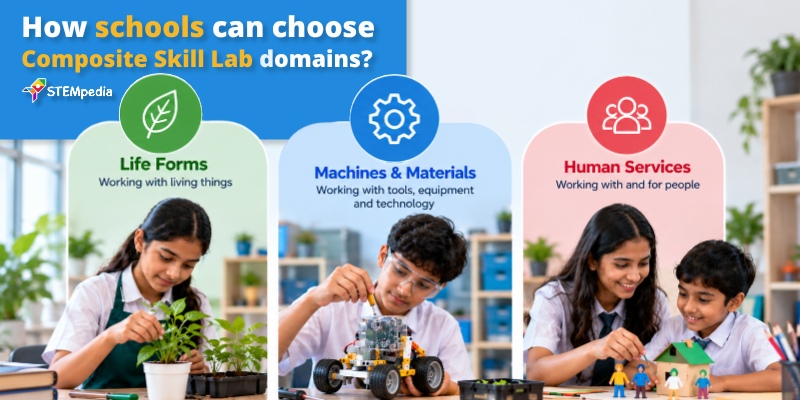
A Composite Skill Lab (CSL) is designed to help students understand different forms of practical work through hands-on experiences, projects, and real-world applications. As defined in the NCF-SE 2023 framework, skill education is structured around three broad Forms of Work:
- Work with Life Forms
- Work with Machines and Materials
- Work in Human Services
Among these, Work with Life Forms introduces students to the world of living systems — including plants, agriculture, sustainability, and environmental technologies.
STEMpedia’s CSL model connects this area with Agriculture 4.0, where students learn how modern technologies can transform traditional practices through smart monitoring, automation, and sustainable solutions.
The objective is not only to teach agriculture as a subject but to help students understand how biology, technology, and problem-solving come together to create solutions for the future.
Related reading:
- What Is a Composite Skill Lab? A Complete Beginner’s Guide for CBSE Schools
- Composite Skill Lab by STEMpedia: A Complete NEP 2020 & NCF-SE Aligned Solution
What is Work with Life Forms?
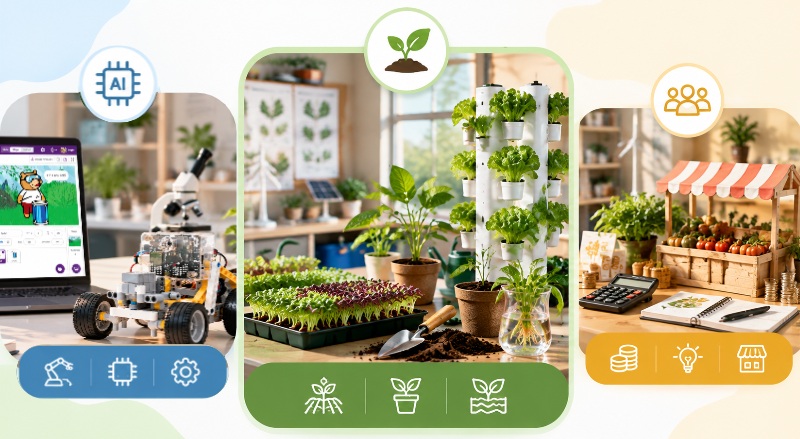
Work with Life Forms focuses on practical activities involving living systems such as plants, animals, and natural resources.
In a Composite Skill Lab, this form of work allows students to explore:
- Agriculture and gardening
- Plant science
- Hydroponics and aeroponics
- Smart cultivation systems
- Sustainable farming practices
- Environmental monitoring
Students learn by observing natural processes, experimenting with cultivation methods, and applying technology to improve productivity and sustainability.
The focus is:
Learn by Growing → Understand Nature → Apply Technology → Build Sustainable Solutions
Agriculture 4.0 — Connecting Farming with Technology
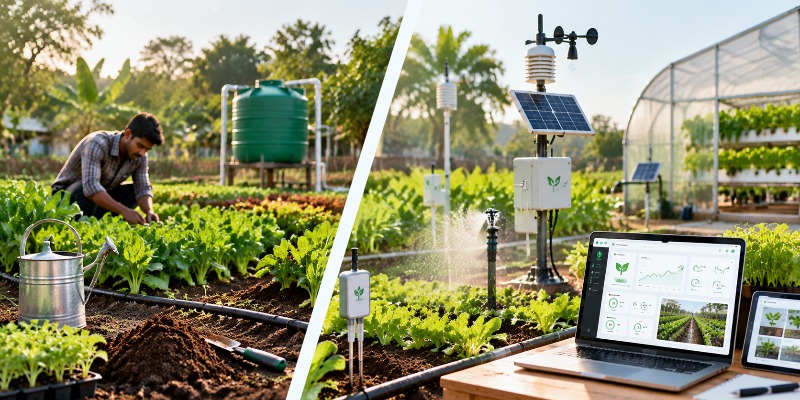
Traditional agriculture is evolving through sensors, automation, and data-based decision-making. Agriculture 4.0 introduces students to how that technology supports smarter, more sustainable farming.
- Smart Monitoring Systems: Students learn how sensors and digital tools track conditions like soil moisture, temperature, light levels, and water requirements — helping them understand plant needs and manage resources more precisely.
- Automated Irrigation: Through smart watering systems, sensor-based irrigation, and controlled water delivery, students see how engineering solutions address real agricultural challenges.
- Plant Care and Smart Cultivation: Activities like seed germination, growth observation, nutrient management, and controlled-environment cultivation connect biological concepts to practical application.
- Hydroponics and Aeroponics: Students explore water-based, soil-free cultivation methods — hydroponic systems, nutrient delivery, and space-efficient farming — introducing them to techniques increasingly used in modern agriculture.
Connecting Agriculture with Technology
Agriculture 4.0 becomes most meaningful when students connect life sciences with engineering and code:
- Plants + Sensors + Coding → Smart Farming System
- Water Management + Automation → Intelligent Irrigation
- Agriculture + Data Analysis → Better Growing Decisions
This interdisciplinary thread is the point — agriculture isn’t limited to traditional practice; it’s connected to electronics, automation, and digital technology, and STEMpedia’s CSL model builds projects specifically to make that connection visible to students.
The Student Learning Journey
Students progress through a consistent pathway:
- Explore — plant requirements, farming methods, environmental factors, sustainable practices
- Experiment — growing plants, monitoring conditions, testing cultivation methods
- Build Solutions — projects using sensors, automation, IoT-based monitoring, smart cultivation techniques
- Present Outcomes — showcasing ideas and solutions through demonstrations and exhibitions
This mirrors the broader CSL learning approach: Learn → Explore → Build → Apply → Create → Present.
Tools STEMpedia Uses for the Life Forms Track
As part of its broader Composite Skill Lab ecosystem, STEMpedia’s toolkit for this track is organised around three categories:
- Smart Monitoring & Analysis — sensor-based tools for tracking soil, water, and environmental conditions
- Gardening and Plant Care — hands-on cultivation equipment for hydroponics, seed germination, and plant growth
- Smart Cultivation Systems — automation and IoT kits that let students build working smart-farming setups
These tools sit inside STEMpedia’s wider CSL curriculum — 20 of the 100 annual sessions are dedicated to this Life Forms track, building toward a student project presented at the Kaushal Mela.
Related reading:
Work with Life Forms Projects for Students
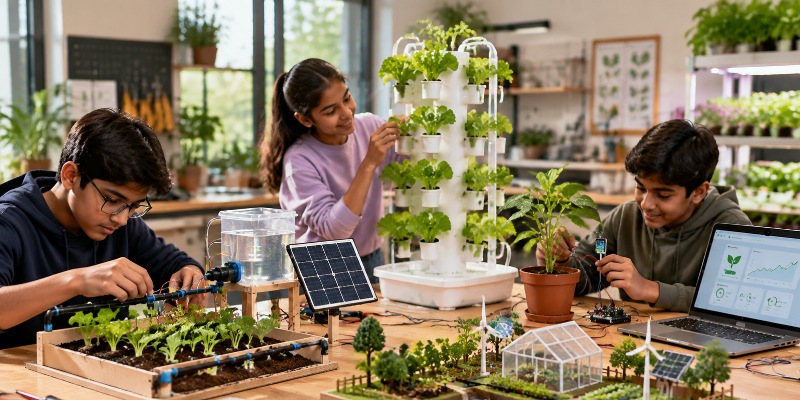
Students can work on practical Agriculture 4.0 projects such as:
- Smart irrigation systems
- Automated plant watering solutions
- IoT-based plant monitoring
- Hydroponic growing systems
- Sustainable farming models
- Environmental monitoring projects
Each project asks students to combine biology with electronics and code — turning a farming problem into an engineered solution.
How does STEMpedia support agriculture learning in CSL?
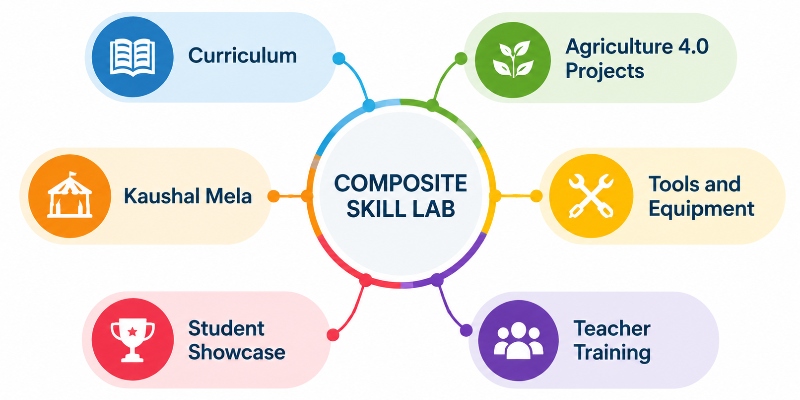
A successful Composite Skill Lab requires more than equipment. Schools need:
- Structured curriculum
- Practical activities
- Teacher support
- Appropriate tools
- Continuous implementation guidance
STEMpedia’s CSL ecosystem combines curriculum, tools, AI and Robotics integration, teacher training, learning resources, and student showcase opportunities. Pasted text
For schools planning implementation, related resources include:
- How Schools Can Use ATL, IT Labs, and Makerspaces for CBSE Composite Skill Lab Setup
- Composite Skill Lab Tools and Equipment for CBSE Schools
- Teacher Training for Composite Skill Labs – How Schools Can Build CSL Readiness
- How to Set Up a Composite Skill Lab in Phases – From Readiness to Launch
Conclusion
Work with Life Forms in a Composite Skill Lab provides students with an opportunity to explore agriculture, sustainability, and technology through practical experiences.
By combining biology, engineering, and innovation, this track becomes a practical learning experience built around one simple arc:
Understand Nature → Apply Technology → Build Sustainable Solutions
Agriculture 4.0 is one part of STEMpedia’s wider Composite Skill Lab model, which brings all three Forms of Work together into one connected learning environment.
Related reading: